General Physician / Internal Medicine: What Do They Treat and When Should You See One?
Learn what General Physicians and Internal Medicine specialists treat, when you should see one, how they manage common and chronic adult health conditions, and when specialist referral may be needed.

When you have a fever, weakness, recurring headache, digestive problems, high blood pressure, diabetes, or an unexplained health concern, one of the first questions is often: Which doctor should I see?
For many adult health concerns, a General Physician or Internal Medicine specialist can be the right starting point.
These doctors are trained to evaluate a broad range of medical conditions rather than focusing on only one organ or body system. Internal medicine physicians, commonly called internists, specialize in the prevention, diagnosis and treatment of health conditions in adults and are particularly trained to manage chronic diseases, complex medical problems and situations where multiple conditions occur together.
Medical Docs – India’s Most Trusted Healthcare Single Window Platform helps patients discover doctors and healthcare services through a connected digital healthcare ecosystem.
What Is a General Physician?
A General Physician is a doctor who provides comprehensive medical care for a wide range of common health concerns.
In everyday healthcare, people may use terms such as General Physician, General Medicine Doctor, Physician, or Internal Medicine Doctor. However, the exact training and scope can vary depending on the healthcare system and the doctor's qualifications.
An Internal Medicine physician, or internist, is specifically trained in adult medicine. According to the American College of Physicians, internal medicine physicians apply clinical expertise to the diagnosis, treatment and compassionate care of adults across the spectrum from health to complex illness.
Unlike doctors who specialize in one particular organ, internal medicine physicians take a broader view of an adult patient's health.
They may evaluate symptoms, identify possible causes, manage ongoing conditions and coordinate care with specialists when necessary.
What Does an Internal Medicine Doctor Treat?
Internal Medicine physicians manage a broad range of adult health conditions.
Common examples include:
- Fever and infections
- Cough and respiratory problems
- High blood pressure
- Diabetes
- High cholesterol
- Thyroid-related conditions
- Obesity and metabolic concerns
- Digestive problems
- Liver-related conditions
- Kidney-related concerns
- Respiratory diseases
- Heart-related risk factors
- Joint and musculoskeletal complaints
- Headaches and general neurological symptoms
- Chronic health conditions
- Multiple health conditions occurring together
The American College of Physicians notes that internists routinely care for adults with conditions such as heart disease, hypertension, diabetes, obesity and pulmonary disease.
The exact diagnosis and treatment depend on the individual's symptoms, medical history, examination and appropriate investigations.
When Should You See a General Physician?
You do not always need to visit a highly specialized doctor for every health concern.
A General Physician or Internal Medicine doctor can often be an appropriate first point of contact when you have symptoms that are new, persistent, recurring or difficult to understand.
You may consider consulting a physician if you experience:
Persistent Fever
A fever that continues, repeatedly returns or is accompanied by other concerning symptoms should be medically evaluated.
Unexplained Weakness or Fatigue
Persistent tiredness can have many possible causes. A physician can assess your overall health and determine whether further evaluation is required.
Recurring Headaches
Frequent or unusual headaches may require medical assessment, particularly when they are new, severe or associated with other symptoms.
Digestive Problems
Recurring acidity, abdominal discomfort, changes in bowel habits, nausea or other digestive complaints may require evaluation.
High Blood Pressure
Hypertension often requires ongoing monitoring and management. A physician can evaluate blood-pressure readings and associated risk factors.
Diabetes or High Blood Sugar
People with diabetes may require regular medical follow-up to monitor the condition and reduce the risk of complications.
Multiple Health Concerns
This is one area where Internal Medicine physicians can be particularly valuable. Their broad training allows them to consider several conditions together rather than examining each problem in isolation.
General Physician vs Internal Medicine Specialist
The terms can sometimes create confusion.
A General Physician is commonly understood as a doctor who provides broad medical care for common adult health concerns.
An Internal Medicine Physician, or internist, is a specialist in adult medicine with extensive training in diagnosing and managing a wide range of adult diseases and complex conditions.
Internal Medicine is particularly focused on adult patients and can involve preventive care, diagnosis, chronic disease management and coordination with other specialists.
Therefore, when looking for a doctor for an adult medical concern, it is important to check the doctor's qualifications, specialization, experience and the type of care they provide.
Why Internal Medicine Is Important for Adults
Adults can experience multiple health conditions at the same time.
For example, a person may have:
Diabetes + High Blood Pressure + High Cholesterol
or
Obesity + Joint Problems + Sleep Issues
Managing these conditions requires looking at the patient as a whole.
Internal Medicine physicians are trained to connect different aspects of adult health and manage complex cases involving multiple conditions. The American College of Physicians describes internists as physicians who are particularly trained to handle chronic illness and patients with more than one disease.
This broader perspective can be valuable when a patient's symptoms do not clearly point to one specific organ or specialty.
General Physicians and Preventive Healthcare
Healthcare is not only about treating illness after symptoms appear.
Preventive healthcare is equally important.
A General Physician or Internal Medicine doctor may help adults with:
- Routine health evaluations
- Blood pressure monitoring
- Diabetes screening and management
- Cholesterol assessment
- Lifestyle-related health concerns
- Weight management
- Preventive health discussions
- Appropriate screening recommendations
- Long-term management of chronic conditions
Internal Medicine physicians are specifically trained in health promotion and disease prevention as well as diagnosis and treatment.
Regular healthcare consultations can help identify potential health concerns early and provide an opportunity to discuss lifestyle and risk factors with a qualified medical professional.
What Happens During a General Physician Consultation?
A consultation usually begins with understanding the patient's health concern.
Depending on the situation, the doctor may discuss:
Medical History
The physician may ask about previous illnesses, medications, allergies, surgeries, family history and existing medical conditions.
Current Symptoms
You may be asked when the symptoms started, how frequently they occur and whether anything makes them better or worse.
Physical Examination
The doctor may perform an examination based on the symptoms and clinical situation.
Diagnostic Tests
If necessary, the physician may recommend laboratory tests, imaging or other investigations to help evaluate the condition.
Treatment or Further Referral
Depending on the findings, the doctor may recommend treatment, monitoring, lifestyle changes or referral to another specialist.
Internal Medicine physicians are also trained to coordinate care when specialist input is needed.
When Can an Internal Medicine Doctor Refer You to a Specialist?
A General Physician or Internal Medicine doctor can often serve as the first point of evaluation.
If a patient's condition requires focused specialist care, the physician may recommend consultation with a specialist such as:
- Cardiologist
- Endocrinologist
- Gastroenterologist
- Nephrologist
- Pulmonologist
- Neurologist
- Rheumatologist
- Oncologist
- Infectious Disease Specialist
Internal Medicine has several subspecialties, including cardiology, endocrinology, gastroenterology, nephrology, oncology, pulmonary medicine and rheumatology.
This makes the General Physician or Internist an important part of coordinated adult healthcare.
How to Choose a General Physician or Internal Medicine Doctor
Choosing a doctor should involve more than simply looking for the nearest clinic.
Consider:
1. Qualification
Check the doctor's medical qualification and specialization.
2. Experience
Consider the doctor's experience with your type of health concern.
3. Area of Practice
Some physicians may have particular experience in areas such as diabetes, hypertension, preventive medicine or chronic disease management.
4. Accessibility
Consider consultation availability, location and follow-up options. **
- Communication**
A good healthcare relationship requires clear communication. You should be able to explain your symptoms and understand the doctor's recommendations.
6. Continuity of Care For chronic conditions, having a physician who can follow your health over time can be valuable.
Find a General Physician or Internal Medicine Doctor with Medical Docs
Finding the right doctor can sometimes be difficult when healthcare information is spread across different sources.
Medical Docs – India’s Most Trusted Healthcare Single Window Platform brings healthcare discovery and digital healthcare services together through a connected ecosystem.
Patients can use Medical Docs to explore healthcare providers and discover doctors based on their healthcare requirements.
You can Find Doctors on Medical Docs and explore available healthcare services through the platform.
Medical Docs is designed to connect:
Patients → Doctors → Clinics → Hospitals → Diagnostic Laboratories → Pharmacies
This single-window approach aims to make the healthcare journey more organized and connected.
Why a Connected Healthcare Platform Matters
A patient's healthcare journey rarely involves only one doctor.
A person may consult a General Physician, undergo diagnostic tests, visit a specialist, receive a prescription and later need pharmacy services.
Keeping these healthcare interactions connected can make the overall healthcare experience easier to navigate.
Medical Docs brings different healthcare participants into one digital ecosystem, helping patients discover and interact with healthcare services through a single platform.
Explore Medical Docs to discover doctors and other healthcare services.
General Physician or Specialist: Which Doctor Should You See?
A simple way to think about it is:
Common or unexplained adult health concern → General Physician / Internal Medicine
Known condition requiring specialized care → Relevant Specialist
Multiple or complex adult health conditions → Internal Medicine may be an appropriate starting point
However, the right doctor depends on the individual's symptoms, medical history and clinical needs.
If you are unsure which specialist to consult, a General Physician or Internal Medicine doctor can often help evaluate the initial concern and determine whether specialist care is appropriate.
General Physician vs Family Physician vs Internal Medicine
These terms are sometimes used interchangeably in everyday conversation, but they can represent different training pathways.
Internal Medicine is specifically focused on adult medicine.
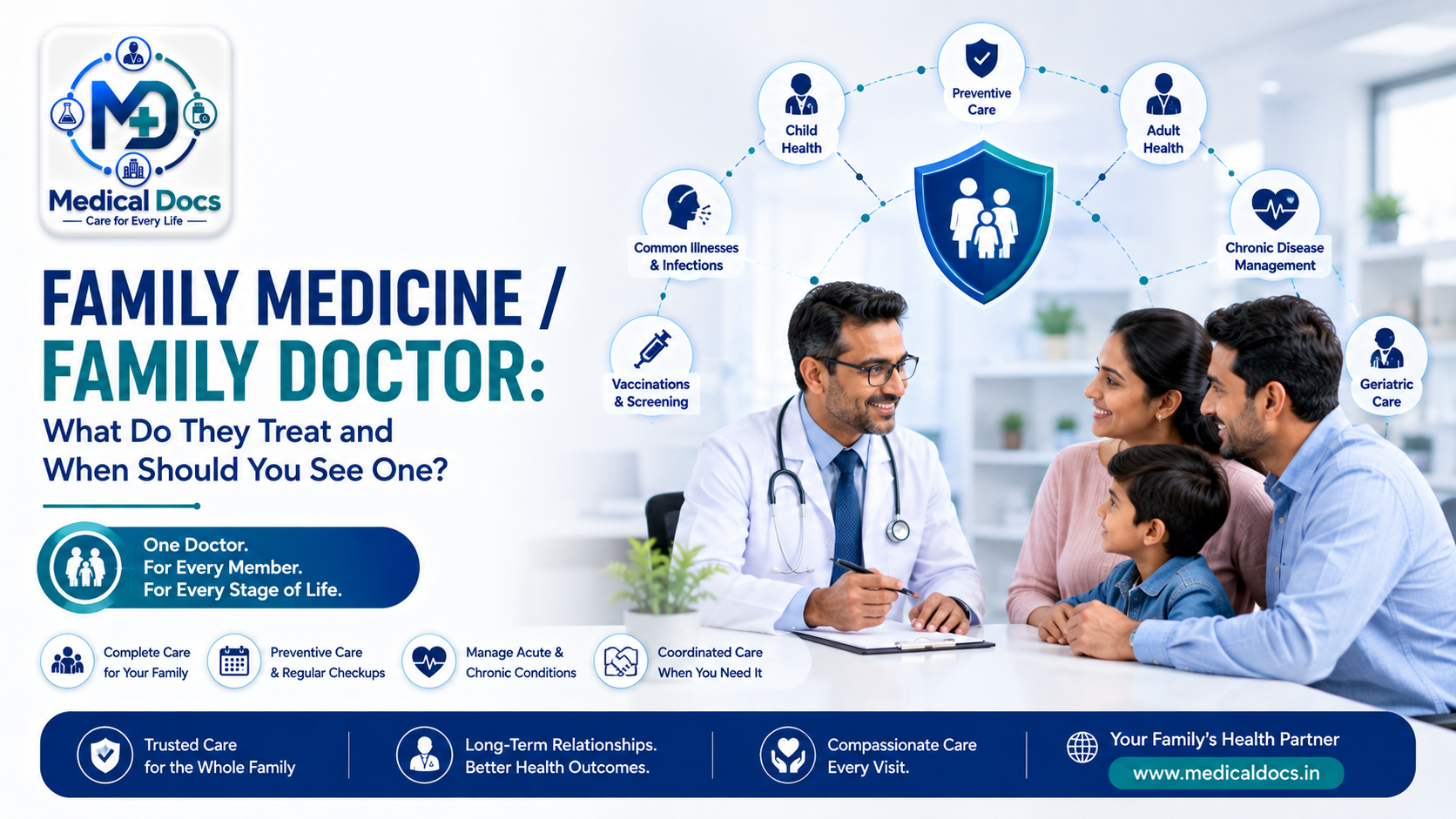
Family Medicine, on the other hand, is designed to provide comprehensive care across different age groups and family health needs.
Internal Medicine physicians are trained extensively in adult diseases and complex medical conditions.
Therefore, when choosing a doctor, patients should look beyond the title and check the doctor's actual qualification, specialization and scope of practice.
Frequently Asked Questions
Is a General Physician the same as an Internal Medicine doctor?
Not necessarily. "General Physician" is a commonly used term for doctors providing broad medical care, while an Internal Medicine physician is specifically trained and specialized in adult medicine. The exact use of these titles can vary by healthcare system.
What conditions does an Internal Medicine doctor treat?
Internal Medicine physicians treat a wide range of adult health conditions, including hypertension, diabetes, heart-related risk factors, respiratory diseases, obesity, infections and complex or multiple chronic conditions.
Can an Internal Medicine doctor treat diabetes?
Yes. Diabetes is among the chronic conditions commonly managed by Internal Medicine physicians.
Can I visit a General Physician for high blood pressure?
Yes. A General Physician or Internal Medicine doctor can evaluate and manage high blood pressure and determine whether additional specialist care is needed.
Can an Internal Medicine doctor refer me to another specialist?
Yes. Internal Medicine physicians can coordinate care and refer patients to appropriate specialists when a condition requires more focused expertise.
When should I see a General Physician?
You can consider seeing a General Physician for a new, persistent or unexplained adult health concern, routine health evaluation, or ongoing management of common chronic conditions.
How can I find a General Physician online?
You can use Medical Docs to explore doctors and healthcare services through its digital healthcare platform.
Is Medical Docs a healthcare platform?
Yes. Medical Docs is designed as a connected healthcare ecosystem bringing patients and healthcare providers together through a single-window digital platform.
Conclusion
A General Physician or Internal Medicine specialist can play an important role in adult healthcare.
From common illnesses and unexplained symptoms to chronic conditions and complex health concerns, these physicians provide broad medical expertise and can help coordinate care when specialist treatment is required.
The key is to seek appropriate medical advice rather than trying to diagnose or treat persistent symptoms on your own.
With healthcare becoming increasingly digital, finding the right doctor should also become easier and more connected.
Medical Docs – India’s Most Trusted Healthcare Single Window Platform is built to support that journey by connecting patients with doctors, clinics, hospitals, diagnostic laboratories and pharmacies through one digital healthcare ecosystem.
Find the right healthcare service for your needs with Medical Docs. Visit Medical Docs
Medical Disclaimer This article is intended for general educational and informational purposes only. It does not provide a diagnosis or replace consultation with a qualified healthcare professional. Medical conditions can vary from person to person. If you have persistent, severe or concerning symptoms, consult an appropriately qualified doctor. In a medical emergency, seek immediate emergency medical care.
Medical information notice
This article is for education only and does not replace diagnosis, treatment or advice from a qualified healthcare professional. Seek urgent care for emergency symptoms.