Understanding Blood Pressure: What Your Numbers Mean and When to Seek Help
High blood pressure often has no obvious symptoms. Learn what your blood pressure numbers mean, how to measure them correctly at home, which lifestyle changes may help, and when a high reading requires urgent medical attention.
Medical note: This article provides general health education and does not replace diagnosis or treatment from a qualified healthcare professional. Blood pressure targets can vary depending on age, pregnancy, diabetes, kidney disease, cardiovascular risk and other medical conditions.
High blood pressure, also called hypertension, is common and can be serious when it remains uncontrolled. It usually does not cause noticeable symptoms, which is why it is often described as a silent condition.
The only reliable way to know your blood pressure is to measure it correctly. A single unusual reading does not always mean that you have hypertension, but repeated high readings should not be ignored.
What do the two blood pressure numbers mean?
Blood pressure is written as two numbers and measured in millimetres of mercury, or mmHg.
For example:
128/82 mmHg
- The first or upper number is the systolic pressure. It represents the pressure in the arteries when the heart contracts and pumps blood.
- The second or lower number is the diastolic pressure. It represents the pressure in the arteries while the heart relaxes between beats.
Both numbers are important. A clinician will consider your readings together with your medical history, age, symptoms and cardiovascular risk.
What is considered high blood pressure?
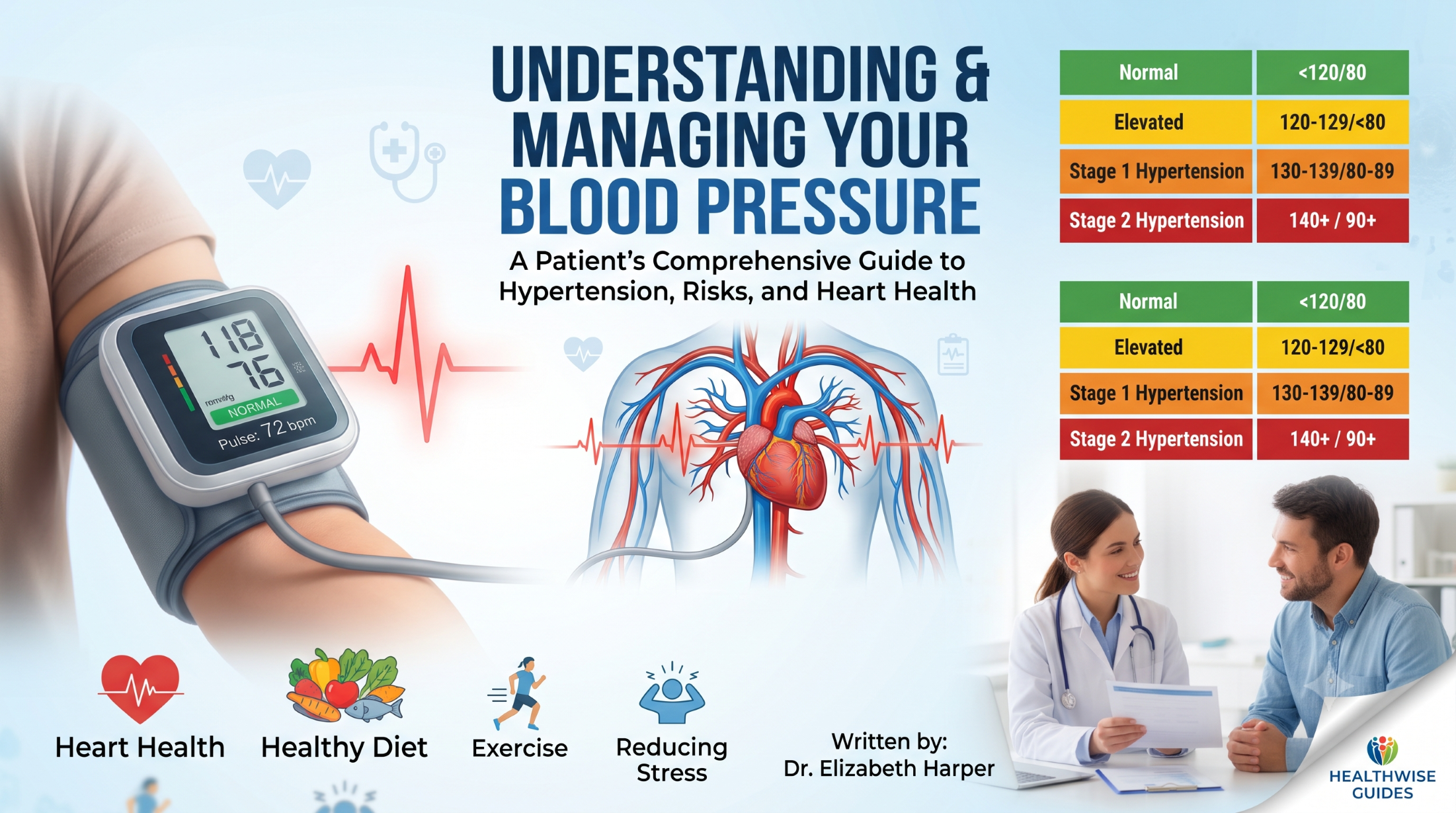
Blood pressure categories can differ slightly between clinical guidelines.
Some guidelines consider blood pressure consistently at or above 130/80 mmHg to be high. The World Health Organization defines hypertension in adults as readings of 140/90 mmHg or higher on two different days.
This difference does not mean that one reading below 140/90 should always be ignored. Readings between these thresholds may still require lifestyle changes, monitoring or treatment depending on your overall health.
Do not diagnose yourself based on a single reading or an online chart. A healthcare professional can confirm whether your blood pressure is high and decide which target is appropriate for you.
Why high blood pressure matters
When blood pressure remains high over time, it can damage blood vessels and place additional strain on important organs.
Uncontrolled hypertension can increase the risk of:
- Heart disease
- Heart attack
- Stroke
- Heart failure
- Chronic kidney disease
- Vision problems
- Damage to blood vessels
- Cognitive decline in some people
Early detection and consistent management can substantially reduce these risks.
Does high blood pressure cause symptoms?
Most people with hypertension do not experience warning signs or symptoms.
Feeling normal does not confirm that your blood pressure is normal. Similarly, headaches or dizziness alone do not confirm hypertension because these symptoms can have many causes.
Very high blood pressure may sometimes be accompanied by:
- Severe headache
- Chest pain
- Shortness of breath
- Dizziness
- Blurred vision or another sudden vision change
- Weakness or numbness
- Confusion
- Difficulty speaking
- Nausea or vomiting
- An abnormal heartbeat
A very high reading accompanied by these symptoms can be a medical emergency.
How to measure blood pressure correctly at home
Incorrect posture, recent activity, caffeine, talking or an unsuitable cuff can affect a reading.
For a more reliable home measurement:
- Use a validated automatic upper-arm blood pressure monitor.
- Avoid smoking, alcohol, caffeine and exercise for at least 30 minutes before measuring.
- Empty your bladder before taking the reading.
- Sit quietly for at least five minutes.
- Sit in a chair with your back supported.
- Keep both feet flat on the floor.
- Do not cross your legs.
- Place the cuff directly against bare skin, not over clothing.
- Support your arm on a table so the cuff is approximately at heart level.
- Remain still and do not talk during the measurement.
- Take at least two readings, around one or two minutes apart.
- Record the date, time and both readings.
Try to measure at approximately the same time each day when your clinician has asked you to monitor at home.
Take your monitor to a medical appointment occasionally so the healthcare team can check the cuff size, your technique and the device’s accuracy.
What should you do after a high reading?
First, remain calm. Stress or incorrect positioning can temporarily raise blood pressure.
Sit quietly for about five minutes and measure again using the correct technique.
Contact a healthcare professional if:
- Your readings remain higher than your recommended range.
- You repeatedly receive readings at or above 140/90 mmHg.
- You are receiving readings at or above 130/80 mmHg and have diabetes, kidney disease, heart disease or another cardiovascular risk.
- You have recently started getting higher readings than usual.
- You are already taking blood pressure medicine but your readings remain uncontrolled.
- High readings occur during pregnancy.
- You experience headaches, dizziness, weakness or other new symptoms.
Keep a written or digital record of your readings and show it to your doctor.
When is high blood pressure an emergency?
A reading higher than 180/120 mmHg is dangerously high.
If the reading is above this level:
- Sit quietly and repeat the measurement after approximately five minutes.
- If it remains very high, obtain urgent medical advice.
- If you also have chest pain, breathing difficulty, sudden weakness, numbness, confusion, vision changes, severe headache or difficulty speaking, treat it as an emergency.
Call 112 in India, or your local emergency service, when severe symptoms or a life-threatening situation are present.
Do not drive yourself to a hospital if you are severely unwell. Do not take an extra dose of blood pressure medicine unless a qualified healthcare professional has specifically instructed you to do so.
What increases the risk of hypertension?
Some risk factors can be changed, while others cannot.
Factors that may increase risk include:
- A diet containing too much salt or sodium
- Low intake of fruits and vegetables
- Physical inactivity
- Tobacco use
- Excessive alcohol consumption
- Being overweight or living with obesity
- Long-term stress and poor sleep
- Diabetes
- Chronic kidney disease
- Increasing age
- Family history of hypertension
- Certain medicines or health conditions
Having one or more risk factors does not mean that hypertension is inevitable. Regular screening and early lifestyle changes can still make a meaningful difference.
Lifestyle changes that may help
Lifestyle changes are an important part of preventing and managing hypertension. However, they do not always replace prescribed medicine.
Reduce excess salt
The World Health Organization recommends that adults limit salt intake to less than approximately 5 grams per day, equivalent to less than 2 grams of sodium.
Salt can come from packaged snacks, pickles, papad, sauces, instant foods, processed meats and restaurant meals, not only from salt added during cooking.
Read nutrition labels and compare the sodium content of similar products.
Eat a balanced diet
Include more:
- Vegetables
- Fruits
- Whole grains
- Pulses and beans
- Nuts and seeds in appropriate portions
- Foods containing unsaturated fats
Limit foods that are highly processed or rich in sodium, saturated fat, trans fat and added sugar.
People with kidney disease or other medical conditions should seek personalised dietary advice before making major changes.
Stay physically active
For many adults, a reasonable general goal is at least 150 minutes of moderate physical activity each week, along with muscle-strengthening activity on two or more days.
Walking, cycling, swimming and other activities can contribute to this total.
If you have heart disease, severe hypertension, pregnancy-related complications, mobility limitations or another chronic condition, ask a healthcare professional what level of activity is safe for you.
Avoid tobacco
Smoking and tobacco use damage blood vessels and significantly increase cardiovascular risk.
Stopping tobacco use is one of the most valuable steps you can take for your heart and overall health.
Maintain a healthy weight
If you are overweight, gradual and sustainable weight reduction may help improve blood pressure.
Avoid extreme diets or unverified weight-loss medicines. A doctor or qualified dietitian can help develop a safe plan.
Limit alcohol
Alcohol can raise blood pressure and may interact with medicines. If you drink alcohol, discuss an appropriate limit with your healthcare professional.
Manage stress and sleep
Stress management does not replace medical treatment, but adequate sleep, relaxation exercises, social support and regular activity can support overall cardiovascular health.
Seek professional help if anxiety, depression or sleep problems are persistent.
What if lifestyle changes are not enough?
Many people require medication in addition to lifestyle changes.
A doctor may prescribe one or more medicines depending on:
- Your blood pressure readings
- Age
- Diabetes or kidney disease
- Previous heart attack or stroke
- Pregnancy status
- Other medicines being taken
- Risk of future cardiovascular disease
- Possible side effects
Take medicines exactly as prescribed.
Do not:
- Stop medication because your readings have improved.
- Share medicines with another person.
- Double a dose after forgetting one.
- Change the dose without medical advice.
- Replace treatment with supplements or herbal remedies without discussing them with your doctor.
Controlled blood pressure often means that the treatment is working. It does not necessarily mean that the underlying condition has disappeared.
Questions to ask your doctor
Consider asking:
- What blood pressure range should I aim for?
- How often should I measure at home?
- Is my blood pressure monitor suitable and accurate?
- Could any of my current medicines increase blood pressure?
- Do I need blood tests, kidney tests or an ECG?
- Which lifestyle change would be most useful for me?
- What should I do if I miss a medicine dose?
- Which symptoms require urgent care?
- When should I return for follow-up?
Key takeaways
- High blood pressure commonly causes no symptoms.
- Correct measurement is essential.
- One abnormal reading does not always establish a diagnosis.
- Repeated high readings should be discussed with a healthcare professional.
- Healthy food choices, reduced salt, physical activity and avoiding tobacco can help.
- Prescribed medication should not be stopped without medical advice.
- Blood pressure above 180/120 mmHg with serious symptoms requires emergency care.
Knowing your numbers is an important first step, but meaningful protection comes from correct measurement, professional evaluation and consistent follow-up.
Medical information notice
This article is for education only and does not replace diagnosis, treatment or advice from a qualified healthcare professional. Seek urgent care for emergency symptoms.