Dermatologist: Your Complete Guide to Skin, Hair and Nail Health
Learn what a Dermatologist treats, common skin, hair and nail conditions, when to seek dermatological care, diagnostic tests, treatment options and practical tips for maintaining healthy skin, hair and nails.
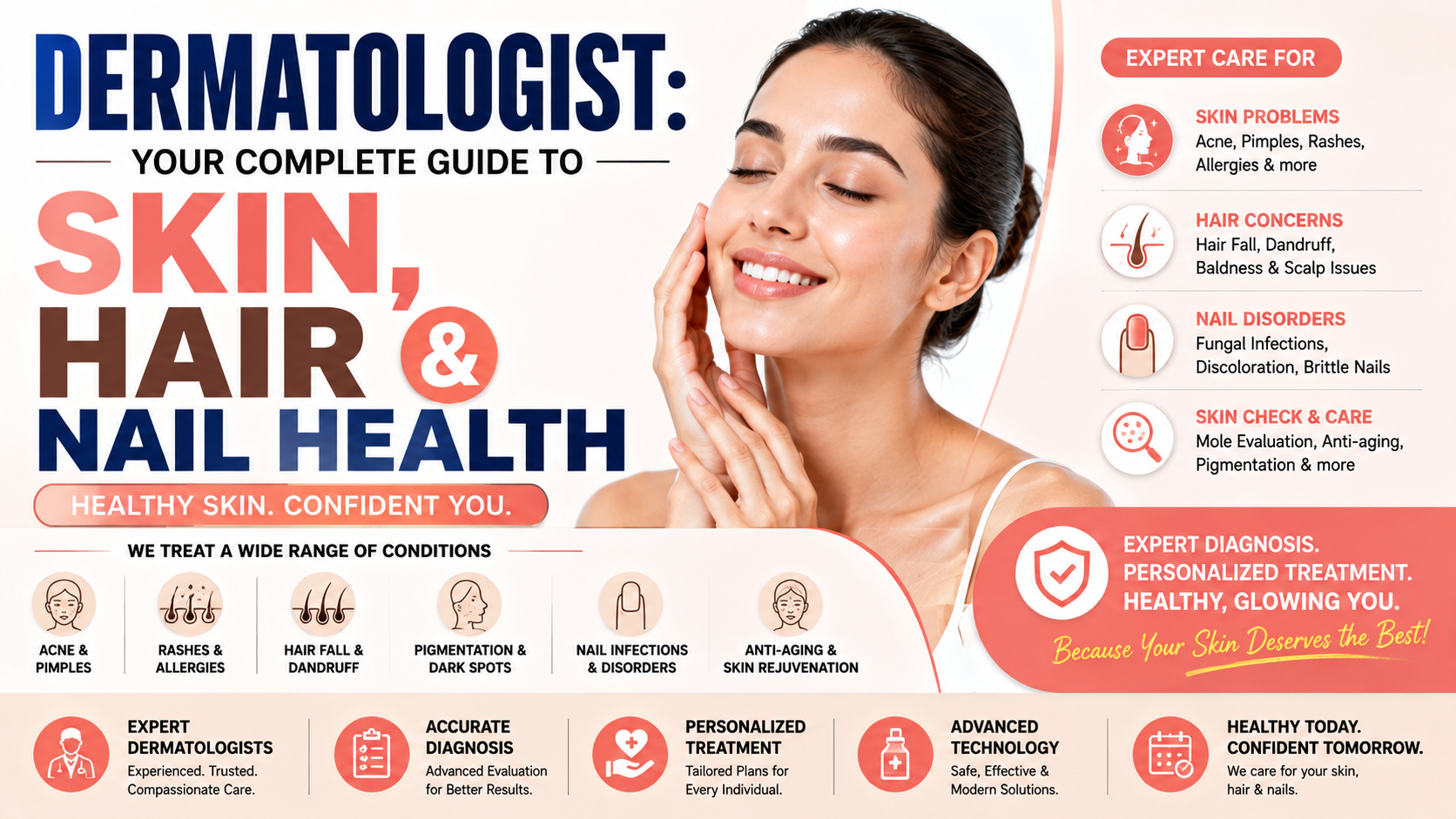
Your skin is the body's largest organ, but many people only think about skin health when a visible problem appears.
A sudden rash. Persistent acne. Hair loss that seems to be getting worse. Unexplained itching. Dark patches that do not go away. A changing mole.
Some of these problems may be temporary. Others can be signs of an underlying skin, hair or nail condition that deserves professional evaluation.
This is where a Dermatologist can help.
A Dermatologist is a doctor specializing in the diagnosis and treatment of conditions affecting the skin, hair and nails. Dermatology also includes the evaluation of certain cosmetic and aesthetic concerns related to these areas.
Medical Docs – India’s Most Trusted Healthcare Single Window Platform helps patients discover doctors and healthcare services through a connected digital healthcare ecosystem.
Who Is a Dermatologist?
A Dermatologist is a medical doctor trained to diagnose and manage diseases and disorders involving the skin, hair and nails.
Dermatologists treat patients of different ages and deal with conditions ranging from common acne and eczema to more complex skin diseases and skin cancers.
According to the American Academy of Dermatology, dermatologists diagnose and treat more than 3,000 conditions affecting the skin, hair and nails.
Their work may involve:
- Medical diagnosis
- Prescription treatment
- Skin examinations
- Minor procedures
- Surgical procedures
- Hair and scalp evaluation
- Nail disorder management
- Skin cancer assessment
- Cosmetic dermatology
The exact treatment approach depends on the patient's condition and the Dermatologist's area of expertise.
What Does a Dermatologist Treat?
Dermatology covers much more than acne.
A Dermatologist may diagnose and treat a wide variety of conditions.
Acne and Pimples
Acne is one of the most common skin conditions, particularly during adolescence and young adulthood, although it can affect people at almost any age.
It may appear as:
- Blackheads
- Whiteheads
- Pimples
- Pus-filled lesions
- Deep, painful nodules
Moderate or severe acne can sometimes leave permanent scars, making appropriate treatment important.
Dermatologists can assess the type and severity of acne and recommend treatment based on the individual's skin and medical history.
Eczema and Dermatitis
Eczema and dermatitis can cause:
- Dry skin
- Redness
- Itching
- Irritation
- Scaling
- Cracked skin
Triggers and symptoms can vary from person to person.
A Dermatologist can determine the likely cause and recommend appropriate treatment and skin-care measures.
Psoriasis
Psoriasis is a chronic inflammatory skin condition that can cause thickened, scaly patches on the skin.
It can affect different parts of the body and may sometimes involve the scalp or nails.
Because psoriasis is a chronic condition, treatment often focuses on controlling symptoms and reducing disease activity over time.
Fungal Skin Infections
Fungal infections can affect areas such as:
- Feet
- Groin
- Body
- Scalp
- Nails
They may cause itching, scaling, redness or changes in the affected area.
Not every itchy or circular rash is fungal, however. Correct diagnosis matters because different skin conditions can look similar.
A Dermatologist can determine the likely cause before recommending treatment.
Hair Loss: When Should You See a Dermatologist?
Hair shedding is normal to some extent.
However, noticeable or persistent hair loss can have many possible causes.
These may include:
- Hereditary hair loss
- Nutritional deficiencies
- Hormonal changes
- Certain illnesses
- Stress-related factors
- Scalp conditions
- Certain medications
- Autoimmune conditions
A Dermatologist can examine the scalp and hair pattern, review medical history and determine whether further evaluation is necessary.
If hair loss is sudden, severe, associated with scalp inflammation or producing clearly defined bald patches, professional evaluation becomes particularly important.
Scalp Problems Are Also a Dermatology Concern
The scalp is skin.
Problems affecting the scalp can include:
- Dandruff
- Seborrheic dermatitis
- Scalp psoriasis
- Fungal infections
- Folliculitis
- Excessive itching
- Inflammation
- Hair loss
Persistent dandruff or itching should not automatically be assumed to be a simple cosmetic issue.
If symptoms continue despite basic care or are accompanied by redness, scaling, sores or hair loss, a Dermatologist can evaluate the scalp.
Nail Problems Can Need Medical Attention
Nails can sometimes provide clues about underlying problems.
Dermatologists treat conditions affecting:
- Fingernails
- Toenails
- Nail beds
- Surrounding skin
Common concerns include:
- Fungal nail infections
- Brittle nails
- Nail discoloration
- Nail inflammation
- Nail separation
- Changes in nail shape
A sudden or unexplained change in a nail should be professionally assessed, particularly if it persists.
Pigmentation and Uneven Skin Tone
Changes in skin colour are another common reason people visit Dermatologists.
These can include:
- Dark spots
- Melasma
- Post-acne pigmentation
- Uneven skin tone
- Hyperpigmentation
- Hypopigmentation
Pigmentation can have many causes, including hormonal changes, inflammation, sun exposure and certain medications or medical conditions.
Treatment depends on the underlying cause.
Simply using a fairness or bleaching product without knowing the cause may worsen some pigmentation problems.
A Dermatologist can identify the likely condition and recommend appropriate treatment.
Moles, Spots and Changing Skin Lesions
Most moles are harmless.
However, changes in a mole or other skin lesion should not be ignored.
Pay attention to changes such as:
- Increasing size
- Change in colour
- Irregular borders
- Significant change in appearance
- Bleeding
- Crusting
- Persistent itching
- A lesion that does not heal
The American Academy of Dermatology recommends that people become familiar with their skin and look for changes that could indicate skin cancer.
A Dermatologist can examine suspicious lesions and determine whether further testing, such as a biopsy, is necessary.
When Should You See a Dermatologist?
You do not need to wait until a skin condition becomes severe.
Consider consulting a Dermatologist if you experience:
- Persistent acne that is painful, widespread or leaving scars.
- Unexplained rashes that continue, spread or repeatedly return.
- Persistent itching without an obvious cause.
- Unusual skin growths or changing moles.
- Sudden or significant hair loss.
- Persistent scalp problems.
- Changes in your nails that cannot be explained.
- Pigmentation changes that are new, spreading or difficult to manage.
- Skin infections that are not improving.
- A wound or sore that does not heal.
Early evaluation can help identify the underlying cause and prevent inappropriate self-treatment.
Dermatology Is Not Only About Appearance
One of the biggest misconceptions about Dermatology is that it is primarily a cosmetic specialty.
In reality, Dermatologists diagnose and treat a large number of medical conditions.
Skin problems can sometimes be related to:
- Allergies
- Infections
- Autoimmune diseases
- Hormonal changes
- Metabolic conditions
- Medication reactions
- Systemic illnesses
The skin can sometimes reflect what is happening elsewhere in the body.
That is why persistent or unusual skin changes deserve proper medical evaluation rather than simply being treated as a cosmetic concern.
Cosmetic Dermatology: What Does It Include?
Dermatology can also address aesthetic concerns.
Depending on the Dermatologist's training and practice, cosmetic services may include procedures or treatments for:
- Acne scars
- Certain pigmentation concerns
- Fine lines
- Uneven skin texture
- Unwanted hair
- Certain types of scars
- Signs of photoaging
Procedures may include techniques such as chemical peels, laser-based treatments, microneedling or other dermatological procedures.
However, not every procedure is suitable for every person.
The treatment should be selected after assessing the patient's skin type, condition, medical history and expected outcome.
Why Self-Treatment Can Sometimes Make Skin Problems Worse
The internet has made skincare information widely available.
It has also made it easier for people to self-diagnose.
A rash may look like a fungal infection.
Acne may actually be another inflammatory skin condition.
Hair loss may be caused by something that requires medical evaluation.
Using strong steroid creams, bleaching products, antibiotics or other medications without appropriate medical guidance can sometimes cause complications or mask the original condition.
A Dermatologist can first identify the likely diagnosis and then recommend appropriate treatment.
Dermatologist vs Cosmetologist
These roles are not the same.
A Dermatologist is a medical doctor specializing in diseases and disorders of the skin, hair and nails.
A Cosmetologist generally focuses on beauty and personal-care services such as skincare, haircare and grooming.
If you have a medical skin condition, unexplained hair loss, persistent rash, infection, suspicious mole or other concerning symptoms, a qualified Dermatologist is the appropriate medical professional to consult.
Dermatologist vs General Physician
A General Physician can evaluate many common health problems and may be the first doctor a patient consults.
A Dermatologist has specialized expertise in skin, hair and nail disorders.
For example:
Fever or general illness → General Physician
Persistent acne → Dermatologist
Unexplained rash → Dermatologist
Sudden hair loss → Dermatologist
Changing mole → Dermatologist
Common infection with no specific skin involvement → General Physician
Healthcare can overlap, and a General Physician may refer a patient to a Dermatologist when specialist evaluation is appropriate.
What Happens During a Dermatology Consultation?
A Dermatology appointment generally begins with a detailed discussion about the problem.
The doctor may ask:
- When did the condition begin?
- Has it changed over time?
- Is it itchy or painful?
- Have you used any medication?
- Do symptoms appear repeatedly?
- Do you have other medical conditions?
- Are there similar conditions in your family?
- Have you recently changed skincare or haircare products?
The Dermatologist will then examine the affected skin, hair or nails.
Depending on the condition, additional investigations may be recommended.
These can include:
- Blood tests
- Skin scraping
- Allergy testing
- Dermoscopy
- Skin biopsy
- Other laboratory or diagnostic investigations
Not every patient requires testing.
The appropriate investigation depends on the clinical assessment.
How to Maintain Healthy Skin, Hair and Nails
Professional treatment is important when a medical condition exists, but everyday habits also matter.
Protect Your Skin From Excessive Sun Exposure
Use appropriate sun protection and avoid prolonged unnecessary exposure to intense sunlight.
Keep Your Skin Clean Without Overdoing It
Excessive washing or harsh products can irritate the skin.
Choose Products Carefully
Skincare products should be appropriate for your skin type and concerns.
Do Not Pick Acne
Repeatedly squeezing or picking pimples can increase inflammation and the risk of scarring.
Maintain a Balanced Diet
Adequate nutrition supports overall health, including skin, hair and nails.
Avoid Unnecessary Medication
Do not use prescription creams or medications without appropriate medical guidance.
Pay Attention to Changes
New, persistent or changing skin, hair or nail problems deserve attention.
Finding the Right Dermatologist
The right Dermatologist is not necessarily the one with the biggest online presence.
When choosing a specialist, consider:
- Medical qualifications: Verify relevant medical and dermatology qualifications.
- Professional registration: Ensure the doctor is appropriately registered to practice.
- Experience: Consider experience with the condition or treatment you are seeking.
- Communication: A good consultation should allow you to explain your concerns comfortably.
- Treatment approach: The doctor should explain the diagnosis and treatment options clearly.
- Follow-up: Some skin and hair conditions require ongoing treatment rather than a single visit.
Find a Dermatologist Through Medical Docs
Searching for a qualified Dermatologist can be time-consuming when information is scattered across different sources.
Medical Docs – India’s Most Trusted Healthcare Single Window Platform is designed to bring patients and healthcare providers together through a connected digital healthcare ecosystem.
Patients can explore doctors and healthcare services based on their requirements.
Find a Dermatologist on Medical Docs
Medical Docs connects different parts of the healthcare ecosystem:
Patients → Doctors → Clinics → Hospitals → Diagnostic Laboratories → Pharmacies
This single-window approach is designed to make healthcare discovery more connected and organized.
A Connected Approach to Dermatology Care
A patient's dermatology journey may involve more than a doctor's consultation.
For example:
Dermatologist → Diagnostic Laboratory → Specialist → Pharmacy → Follow-up Consultation
Some conditions may require laboratory investigations, prescription medicines or repeated consultations.
Having access to different healthcare services through a connected ecosystem can make the overall healthcare journey easier to navigate.
Medical Docs is built around this broader approach to healthcare discovery.
Through Medical Docs, patients can explore doctors, clinics, hospitals, diagnostic laboratories and pharmacies.
Frequently Asked Questions About Dermatologists
What does a Dermatologist treat?
Dermatologists diagnose and treat medical conditions affecting the skin, hair and nails. These can include acne, eczema, psoriasis, infections, hair loss, pigmentation problems and many other conditions.
Should I see a Dermatologist for acne?
You should consider seeing a Dermatologist if acne is persistent, painful, widespread, leaving scars or not improving with basic skincare.
Can a Dermatologist treat hair loss?
Yes. Dermatologists can evaluate different causes of hair loss and recommend appropriate treatment or further investigation.
Can Dermatologists treat dandruff?
Yes. Persistent dandruff or scalp scaling can be evaluated by a Dermatologist, particularly when symptoms are severe, recurrent or accompanied by inflammation or hair loss.
When should I worry about a mole?
A changing mole, unusual skin growth, persistent bleeding, crusting or a lesion that does not heal should be evaluated by a qualified Dermatologist.
Can a Dermatologist treat pigmentation?
Yes. Dermatologists can evaluate pigmentation problems and determine the underlying cause before recommending treatment.
Is Dermatology only for cosmetic problems?
No. Dermatology is a medical specialty covering thousands of conditions affecting the skin, hair and nails.
Can children visit a Dermatologist?
Yes. Children can develop skin, hair and nail conditions that may require dermatological evaluation.
What is the difference between a Dermatologist and a Cosmetologist?
A Dermatologist is a medical doctor specializing in skin, hair and nail disorders. A Cosmetologist generally provides beauty and personal-care services.
Can I find a Dermatologist online?
Yes. You can explore Dermatologists and other healthcare providers through Medical Docs.
Conclusion
Healthy skin is not simply about appearance.
Your skin, hair and nails can be affected by infections, inflammation, allergies, hormonal changes, chronic conditions and many other factors.
A Dermatologist has specialized medical training to evaluate these concerns, identify possible causes and recommend appropriate treatment.
Whether you are dealing with persistent acne, hair loss, pigmentation, a recurring rash, a scalp condition, nail changes or a suspicious skin lesion, professional evaluation can help you understand what is actually happening rather than relying on guesswork.
And finding the right healthcare professional should not be complicated.
Medical Docs – India’s Most Trusted Healthcare Single Window Platform connects patients with doctors, clinics, hospitals, diagnostic laboratories and pharmacies through one connected digital healthcare ecosystem.
Find the right Dermatologist for your skin, hair and nail health with Medical Docs.
Medical Disclaimer
This article is intended for general educational and informational purposes only. It does not provide a diagnosis or replace consultation with a qualified Dermatologist or other healthcare professional. Skin, hair and nail conditions can have different causes and may require different treatments. Do not start prescription medicines or medical treatments based solely on information in this article. If you have a rapidly changing skin lesion, severe allergic reaction, extensive infection or another urgent medical concern, seek prompt medical attention.
Medical information notice
This article is for education only and does not replace diagnosis, treatment or advice from a qualified healthcare professional. Seek urgent care for emergency symptoms.