Psychiatrist: Understanding Mental Health, Diagnosis and Treatment
Learn what a Psychiatrist does, common mental health conditions they treat, when to seek psychiatric care, available treatment approaches, emergency warning signs and how to find the right mental health professional.
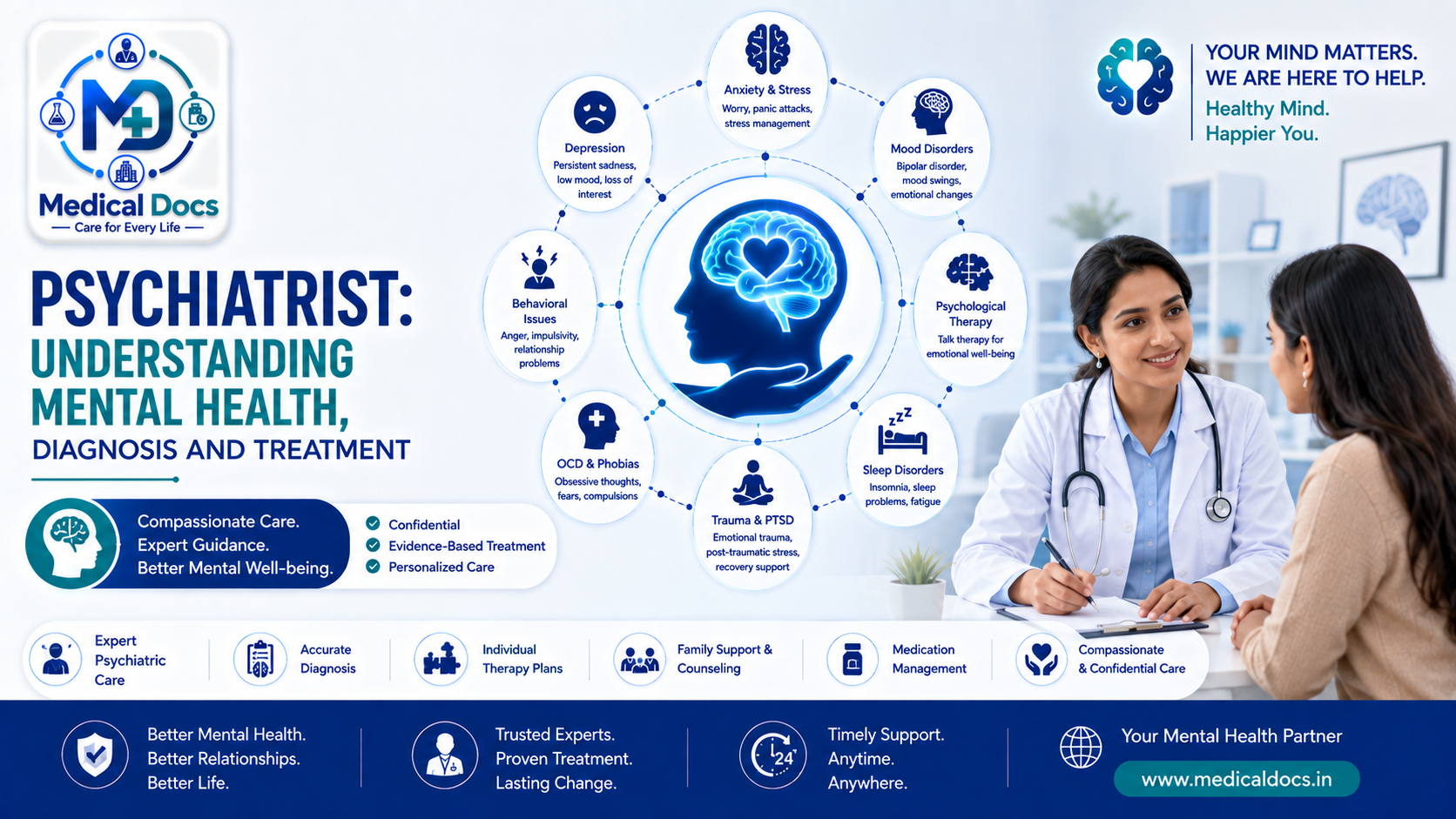
Mental health is an important part of overall health.
Just as persistent chest pain may require a Cardiologist or ongoing skin problems may require a Dermatologist, changes in mood, thoughts, behaviour or emotional wellbeing can sometimes require support from a qualified mental health professional.
People may experience periods of stress, sadness, anxiety or difficulty coping with life circumstances. These experiences do not automatically mean that someone has a mental health disorder.
However, when symptoms become persistent, severe or begin affecting relationships, work, studies, sleep or everyday life, professional evaluation can make an important difference.
A Psychiatrist is a medical doctor specializing in the diagnosis, treatment and prevention of mental health and psychiatric conditions.
Medical Docs – India’s Most Trusted Healthcare Single Window Platform helps patients discover doctors and healthcare services through a connected digital healthcare ecosystem.
What Is a Psychiatrist?
A Psychiatrist is a medical doctor who specializes in mental health.
Psychiatrists evaluate the relationship between a person's emotional wellbeing, thoughts, behaviour and physical health.
They can diagnose and treat a broad range of mental health conditions and may use:
- Medical assessment
- Psychiatric evaluation
- Psychotherapy
- Prescription medication
- Behavioural and lifestyle approaches
- Referrals to other mental health professionals
- Ongoing follow-up and monitoring
The treatment approach depends on the individual's symptoms, diagnosis, medical history and personal circumstances.
The American Psychiatric Association describes psychiatrists as physicians who specialize in the diagnosis, treatment and prevention of mental, emotional and behavioural disorders.
What Does a Psychiatrist Treat?
Psychiatry covers a broad range of mental and behavioural health conditions.
Some of the conditions a Psychiatrist may evaluate and manage include:
Depression
Depression is more than occasional sadness.
A depressive disorder can involve persistent low mood, loss of interest or pleasure, changes in sleep or appetite, low energy, difficulty concentrating and feelings of hopelessness.
Symptoms can vary considerably from person to person.
A Psychiatrist can assess whether symptoms may indicate depression or another condition and recommend an appropriate treatment plan.
Anxiety Disorders
Anxiety is a normal human response to stress.
However, excessive or persistent anxiety that interferes with daily life may require professional evaluation.
Anxiety disorders can include conditions such as:
- Generalized anxiety disorder
- Panic disorder
- Social anxiety disorder
- Specific phobias
Symptoms may include excessive worry, restlessness, difficulty concentrating, sleep problems, rapid heartbeat or episodes of intense fear.
Bipolar Disorder
Bipolar disorder involves significant changes in mood, energy and activity levels.
A person may experience episodes of depression and periods of unusually elevated or irritable mood.
During manic or hypomanic episodes, symptoms can include:
- Increased energy
- Reduced need for sleep
- Rapid speech
- Racing thoughts
- Increased activity
- Impulsive behaviour
Bipolar disorder requires proper medical assessment because symptoms can overlap with other psychiatric or medical conditions.
Schizophrenia and Psychotic Disorders
Psychotic disorders can affect a person's perception of reality.
Symptoms may include:
- Hallucinations
- Delusions
- Disorganized thinking
- Changes in behaviour
- Social withdrawal
Schizophrenia is a serious mental health condition that requires professional treatment and ongoing care.
A Psychiatrist can assess symptoms, establish an appropriate diagnosis and develop a treatment plan.
Obsessive-Compulsive Disorder (OCD)
OCD involves recurring unwanted thoughts, images or urges and repetitive behaviours or mental acts performed in response to them.
These symptoms can become time-consuming and interfere significantly with everyday life.
OCD is not simply about liking cleanliness or being organized.
A Psychiatrist can assess whether symptoms are consistent with OCD or another condition and recommend appropriate treatment.
Post-Traumatic Stress Disorder (PTSD)
Some people develop persistent psychological symptoms after experiencing or witnessing a traumatic event.
PTSD can involve:
- Intrusive memories
- Nightmares
- Avoidance
- Increased alertness
- Sleep difficulties
- Emotional distress
Professional mental healthcare can help individuals understand and manage these symptoms.
Eating Disorders
Eating disorders involve serious disturbances in eating behaviour and can affect both physical and mental health.
Examples include:
- Anorexia nervosa
- Bulimia nervosa
- Binge-eating disorder
Treatment may involve a multidisciplinary team that can include a Psychiatrist, psychologist, physician, dietitian and other healthcare professionals.
Sleep and Mental Health
Sleep and mental health are closely connected.
Persistent sleep problems can affect mood, concentration, energy and emotional wellbeing.
At the same time, conditions such as anxiety and depression can interfere with sleep.
If sleep problems continue for a significant period or occur alongside major changes in mood, anxiety or behaviour, it may be useful to discuss them with a qualified healthcare professional.
Substance Use and Addiction
Psychiatrists can also help people experiencing problems related to alcohol, tobacco or other substances.
Substance-use disorders can affect:
- Physical health
- Mental health
- Relationships
- Work
- Education
- Financial stability
- Everyday functioning
Treatment can involve medical care, psychological support, behavioural interventions and other services depending on the person's needs.
Seeking professional help is a medical decision—not a sign of personal weakness.
When Should You See a Psychiatrist?
Many people hesitate to consult a Psychiatrist because they believe their problem is "not serious enough."
There is no need to wait until symptoms become overwhelming.
Professional evaluation may be appropriate when emotional or behavioural changes are:
Persistent — symptoms continue for weeks or repeatedly return.
Intense — emotions or thoughts feel difficult to manage.
Disruptive — work, education, relationships or daily activities are being affected.
Unusual — there are significant changes in behaviour, perception or thinking.
Difficult to control — repeated thoughts, fears or behaviours are interfering with normal life.
You may consider speaking with a Psychiatrist if you are experiencing:
- Persistent sadness
- Severe or recurring anxiety
- Panic attacks
- Major mood changes
- Difficulty functioning normally
- Severe sleep problems
- Unexplained changes in behaviour
- Repeated intrusive thoughts
- Hallucinations or unusual beliefs
- Problems related to substance use
- Thoughts of self-harm or suicide
Psychiatry Is Not Only About Medication
One of the most common misconceptions about Psychiatry is that a Psychiatrist simply prescribes medicines.
Psychiatric treatment can involve several approaches.
Depending on the condition, a Psychiatrist may recommend:
Medication
Medicines can be useful for a range of psychiatric conditions.
The choice depends on the diagnosis, symptoms, medical history and individual circumstances.
Psychotherapy
Psychotherapy, commonly called talk therapy, involves working with a trained mental health professional to understand and manage thoughts, emotions and behaviours.
Some Psychiatrists provide psychotherapy themselves, while others coordinate care with Psychologists or other qualified therapists.
Lifestyle and Behavioural Support
Sleep, physical activity, substance use, stress management and social support can all be relevant to mental wellbeing.
Combined Treatment
For some conditions, medication and psychotherapy may be used together.
There is no single treatment that works for every person.
Psychiatrist vs Psychologist: What Is the Difference?
These two professions are often confused.
A Psychiatrist is a medical doctor specializing in mental health. Psychiatrists can diagnose psychiatric conditions, assess physical and mental health factors and prescribe medication where legally permitted.
A Psychologist is a mental health professional trained in psychology. Depending on their qualifications and professional scope, psychologists may provide psychological assessment and psychotherapy.
In many situations, Psychiatrists and Psychologists work together.
For example:
Psychiatrist → Medical and psychiatric assessment
Psychologist → Psychological assessment and psychotherapy
The appropriate professional depends on the person's needs.
Psychiatrist vs Neurologist
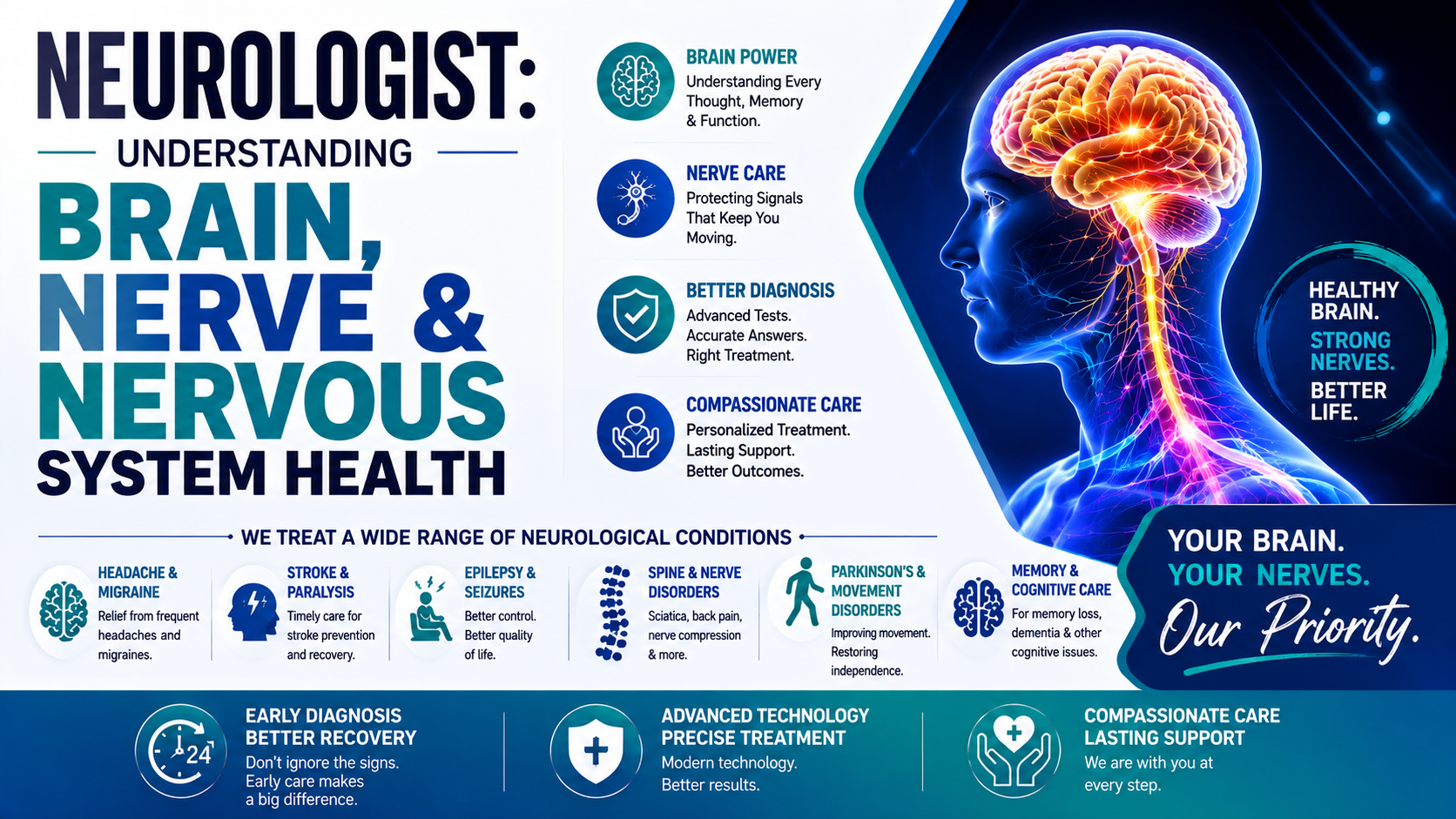
Psychiatry and Neurology both involve the brain, but they focus on different areas.
A Neurologist primarily diagnoses and manages diseases of the brain, spinal cord and peripheral nervous system.
A Psychiatrist focuses primarily on mental, emotional and behavioural disorders.
There can be overlap because neurological conditions can sometimes affect mood, memory or behaviour, while psychiatric symptoms can also have physical or neurological causes.
When the diagnosis is uncertain, healthcare professionals may work together.
What Happens During a Psychiatric Consultation?
A first psychiatric appointment is generally more conversational than many other medical consultations.
The Psychiatrist may ask about:
- Current concerns
- Mood
- Thoughts and emotions
- Sleep
- Appetite
- Energy levels
- Behaviour changes
- Work or academic functioning
- Relationships
- Previous mental health history
- Medical conditions
- Current medicines
- Substance use
- Family history
The doctor may also assess how symptoms are affecting everyday life.
Depending on the situation, additional medical tests may sometimes be recommended to rule out physical causes or assess other health factors.
The goal is not simply to attach a label to someone's experience.
It is to understand what is happening, why it may be happening and what type of support may be appropriate.
Can Physical Health Affect Mental Health?
Mental and physical health are closely connected.
Certain medical conditions, medications, hormonal changes, sleep problems and substance use can affect mood, concentration, behaviour or emotional wellbeing.
For example, thyroid disorders, some neurological conditions and certain medications can produce symptoms that may resemble psychiatric problems.
This is one reason a Psychiatrist may consider a person's overall medical history rather than looking only at emotional symptoms.
Good mental healthcare considers the whole person.
Mental Health During Different Stages of Life
Mental health needs can change throughout life.
Children and Adolescents
Young people may experience anxiety, behavioural concerns, mood problems, attention difficulties or other mental health conditions.
Early professional assessment can be particularly important when symptoms affect school, relationships or everyday functioning.
Adults
Adults may experience depression, anxiety, workplace stress, substance-use problems, relationship difficulties or other psychiatric conditions.
Older Adults
Mental health concerns in older adults can sometimes overlap with medical or neurological conditions.
Changes in memory, mood or behaviour should therefore be properly evaluated rather than automatically being considered a normal part of ageing.
Can a Psychiatrist Help With Stress?
Not every stressful period requires psychiatric treatment.
Stress is a normal response to challenging circumstances.
However, when stress becomes persistent and begins significantly affecting sleep, mood, work, relationships or everyday functioning, professional support may be helpful.
Depending on the situation, a Psychologist, Counsellor, Psychiatrist or another qualified healthcare professional may be appropriate.
The important point is that asking for help early is completely valid.
Mental Health and the Workplace
Work can be an important part of a person's life, but excessive stress or untreated mental health problems can affect:
- Concentration
- Productivity
- Sleep
- Relationships
- Decision-making
- Motivation
- Emotional wellbeing
Mental health difficulties should not automatically be dismissed as a lack of discipline or motivation.
When symptoms persist, professional assessment can help determine whether there is an underlying mental health condition requiring treatment.
Mental Health Emergencies: When Immediate Help Is Needed
Some mental health situations require urgent attention.
If a person is:
- Threatening to harm themselves or someone else
- Experiencing severe confusion or loss of contact with reality
- Having serious suicidal thoughts
- Experiencing severe agitation or dangerous behaviour
- Unable to care for themselves safely
they may require immediate emergency medical assistance.
Do not leave a person alone if there is an immediate risk of self-harm or harm to others.
In India, 112 is the national emergency number. You can also seek immediate help at the nearest emergency department or through local emergency medical services.
A routine online search or appointment should not replace emergency care in an immediate crisis.
How to Find the Right Psychiatrist
Choosing a mental health professional can feel personal.
Consider the following when selecting a Psychiatrist:
Medical Qualifications
Verify the doctor's medical qualification and relevant psychiatric specialization.
Experience
Consider whether the doctor has experience with the type of concern you are seeking help for.
Communication
You should feel able to discuss sensitive subjects without fear of judgment.
Treatment Approach
Ask questions about the proposed diagnosis, treatment options, expected benefits and possible side effects.
Follow-Up
Some psychiatric conditions require ongoing monitoring, so availability for follow-up can be important.
Privacy and Comfort
Mental healthcare involves sensitive information. A professional environment where you feel comfortable communicating openly is important.
Finding a Psychiatrist Through Medical Docs
Finding the right mental healthcare professional should be simple, private and accessible.
Medical Docs – India’s Most Trusted Healthcare Single Window Platform is designed to connect patients with doctors and healthcare services through one digital healthcare ecosystem.
Patients can explore doctors and healthcare providers based on their healthcare requirements.
Find a Psychiatrist on Medical Docs
Medical Docs connects different parts of the healthcare ecosystem:
Patients → Doctors → Clinics → Hospitals → Diagnostic Laboratories → Pharmacies
This single-window approach is designed to make healthcare discovery more connected and organized.
Mental Healthcare Can Be a Journey
For some people, one consultation may provide the clarity they need.
For others, mental healthcare can involve a longer process:
Assessment → Diagnosis → Treatment → Follow-Up → Monitoring → Recovery and Support
The journey can look different for every individual.
Some people may benefit from psychotherapy.
Some may require medication.
Some may need a combination of treatments.
Others may first need evaluation to understand whether their symptoms are related to a psychiatric condition, physical illness or another factor.
There is no single definition of what seeking mental healthcare should look like.
Building a More Connected Mental Healthcare Experience
Mental healthcare may involve several professionals over time.
A person might interact with:
Psychiatrist → Psychologist → Diagnostic Laboratory → General Physician → Hospital → Pharmacy
Depending on the condition, different healthcare services may become part of the treatment journey.
A connected healthcare ecosystem can make it easier to discover relevant doctors and services rather than searching across multiple disconnected platforms.
Medical Docs is designed around this connected approach.
Through Medical Docs, patients can explore doctors, clinics, hospitals, diagnostic laboratories and pharmacies through one healthcare ecosystem.
Why Talking About Mental Health Matters
Mental health problems are medical conditions—not character flaws.
A person experiencing depression is not simply "weak."
Someone with an anxiety disorder is not necessarily "overthinking."
A person with addiction is not simply lacking willpower.
These conditions can involve biological, psychological, social and environmental factors and may require professional treatment.
Creating a healthcare environment where people feel comfortable asking for help is an important part of improving mental health outcomes.
Frequently Asked Questions About Psychiatrists
What does a Psychiatrist do?
A Psychiatrist is a medical doctor who specializes in diagnosing, treating and preventing mental, emotional and behavioural disorders.
What conditions does a Psychiatrist treat?
Psychiatrists may treat conditions such as depression, anxiety disorders, bipolar disorder, schizophrenia and other psychotic disorders, OCD, PTSD, substance-use disorders and various other psychiatric conditions.
Can a Psychiatrist prescribe medication?
Yes. Psychiatrists are medical doctors and can prescribe psychiatric medication within the applicable laws and regulations.
Does seeing a Psychiatrist mean I have a mental illness?
No. Consulting a Psychiatrist does not automatically mean that you have a mental health disorder. A professional consultation is an opportunity to understand your symptoms and determine whether treatment or support is appropriate.
What is the difference between a Psychiatrist and a Psychologist?
A Psychiatrist is a medical doctor specializing in mental health and can prescribe medication. A Psychologist is trained in psychology and may provide psychological assessment and psychotherapy according to their qualifications and professional scope.
Can a Psychiatrist provide therapy?
Some Psychiatrists provide psychotherapy themselves, while others work alongside Psychologists or therapists and coordinate treatment.
Should I see a Psychiatrist for anxiety?
If anxiety is persistent, severe or interfering with daily life, professional evaluation can be helpful. Depending on the situation, a Psychiatrist or other qualified mental health professional may be appropriate.
Can a Psychiatrist help with sleep problems?
Yes. A Psychiatrist can evaluate sleep problems when they occur alongside mental health symptoms or may be related to a psychiatric condition. Other medical causes of sleep problems may also need evaluation.
Can children see a Psychiatrist?
Yes. Children and adolescents can experience mental health conditions that require specialist assessment. Depending on the child's age and concern, a Child and Adolescent Psychiatrist or another appropriately qualified professional may be recommended.
When is a mental health problem an emergency?
Immediate help is required when someone is at imminent risk of harming themselves or another person, is severely confused or disconnected from reality, or cannot safely care for themselves.
Can I find a Psychiatrist online?
Yes. You can explore Psychiatrists and other healthcare providers through Medical Docs.
Conclusion
Mental health deserves the same seriousness and respect as physical health.
Persistent anxiety, depression, major mood changes, disturbing thoughts, behavioural changes, addiction, sleep problems or difficulty functioning in everyday life can all be reasons to consider professional support.
A Psychiatrist is a medical doctor specializing in mental, emotional and behavioural health conditions. Through assessment, diagnosis, medication, psychotherapy and coordination with other professionals, Psychiatrists can help people understand and manage a wide range of mental health concerns.
Most importantly, seeking psychiatric care is not a sign of weakness.
It is a healthcare decision.
If you or someone you know is experiencing a mental health emergency or an immediate risk of self-harm or harm to others, seek emergency medical assistance without delay.
For non-emergency healthcare needs, Medical Docs – India’s Most Trusted Healthcare Single Window Platform helps connect patients with doctors, clinics, hospitals, diagnostic laboratories and pharmacies through one connected digital healthcare ecosystem.
Find the right mental healthcare professional with Medical Docs.
Medical Disclaimer
This article is intended for general educational and informational purposes only. It is provided for general awareness and does not diagnose, treat or replace consultation with a qualified Psychiatrist, Psychologist or other healthcare professional. Mental health symptoms can have different causes, and treatment should be individualized. Do not start, stop or change psychiatric medication without medical guidance. If you or someone else is in immediate danger or at risk of self-harm or harming others, seek emergency medical care immediately.
Medical information notice
This article is for education only and does not replace diagnosis, treatment or advice from a qualified healthcare professional. Seek urgent care for emergency symptoms.