Cardiologist: What Does a Heart Specialist Treat and When Should You See One?
Learn what a Cardiologist treats, common heart conditions, when you should see a heart specialist, important cardiac tests, treatment options and ways to support better heart health.
Your heart works continuously, every minute of every day. Yet many heart-related problems can develop quietly before a person notices significant symptoms.
A person may initially experience something as simple as unusual tiredness, breathlessness while walking, recurring chest discomfort or an irregular heartbeat. Sometimes these symptoms may have a harmless explanation. At other times, they may indicate a cardiovascular condition that requires medical evaluation.
This is why understanding when to see a Cardiologist matters.
A Cardiologist is a doctor who specializes in the diagnosis, treatment and prevention of diseases and conditions affecting the heart and blood vessels. Cardiologists also help patients manage cardiovascular risk factors such as high blood pressure and high cholesterol and determine when specialized cardiac investigations or treatment may be necessary.
Medical Docs – India’s Most Trusted Healthcare Single Window Platform helps patients discover doctors and healthcare services through a connected digital healthcare ecosystem.
What Is a Cardiologist?
A Cardiologist is a physician specializing in cardiovascular health.
The cardiovascular system includes the:
- Heart
- Arteries
- Veins
- Blood vessels
Cardiologists evaluate patients with symptoms or risk factors related to cardiovascular disease and may diagnose and manage a wide range of heart conditions.
Their work can involve preventive care, medical treatment, diagnostic testing and coordination with other healthcare professionals.
For certain conditions, a Cardiologist may also work with an interventional cardiologist or cardiovascular surgeon when procedures or surgery are required.
The American Heart Association explains that cardiologists are doctors who specialize in diagnosing and treating diseases of the heart and blood vessels.
What Does a Cardiologist Treat?
Cardiology covers a wide range of cardiovascular conditions.
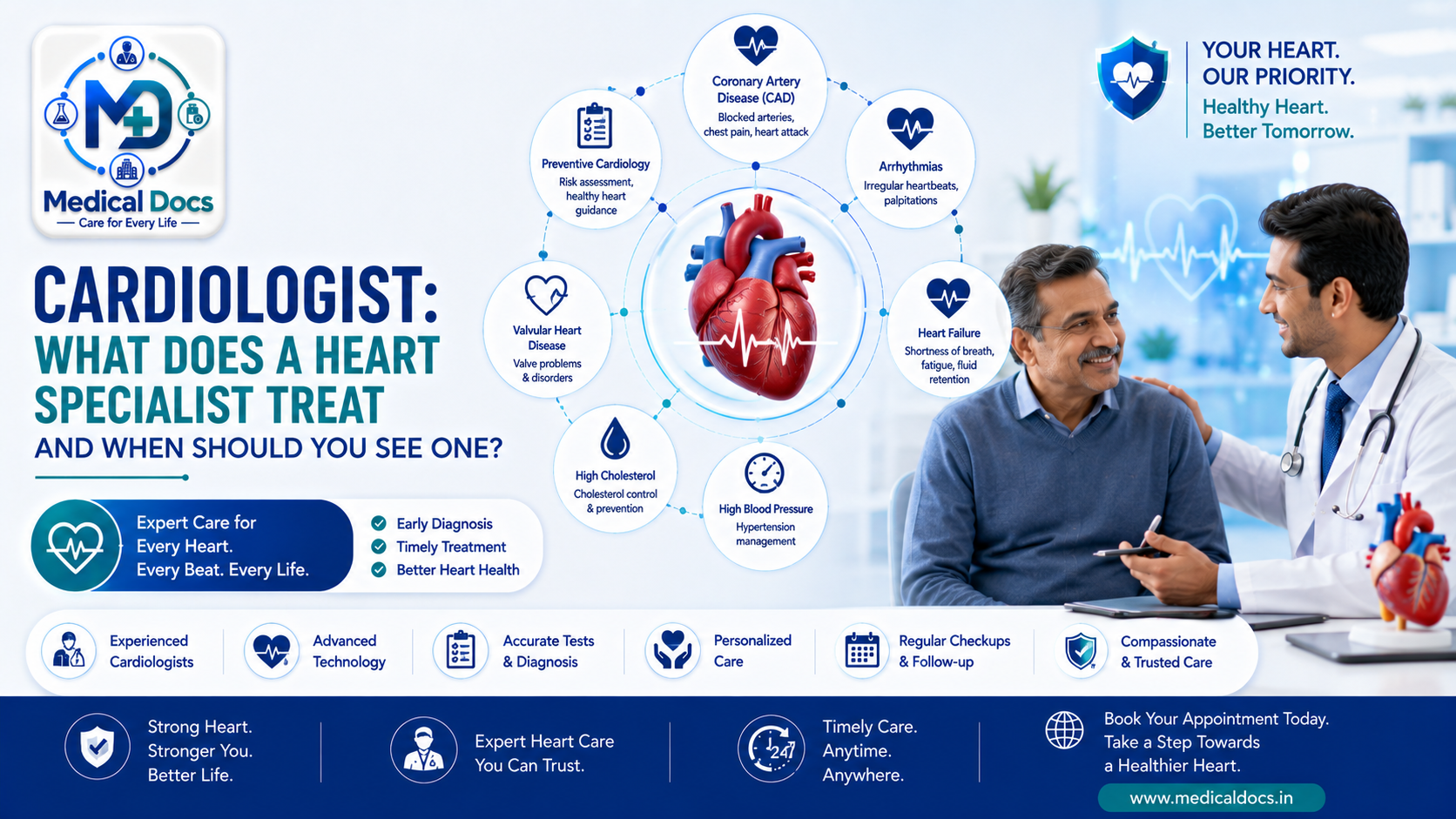
Some of the common conditions evaluated and managed by Cardiologists include:
High Blood Pressure
Hypertension is one of the major risk factors for cardiovascular disease.
Because high blood pressure often does not cause noticeable symptoms, regular monitoring can be important, particularly for people with risk factors.
A Cardiologist may assess blood-pressure control and cardiovascular risk and recommend appropriate management.
Coronary Artery Disease
Coronary artery disease occurs when the blood vessels supplying the heart become narrowed or blocked.
It can reduce blood flow to the heart muscle and may cause symptoms such as chest discomfort or shortness of breath.
Heart Attack
A heart attack occurs when blood flow to part of the heart muscle becomes blocked.
It is a medical emergency and requires immediate medical attention.
Heart Failure
Heart failure does not mean that the heart has stopped working.
It means the heart is unable to pump enough blood to meet the body's needs.
Cardiologists can help diagnose and manage heart failure and monitor patients over time.
Arrhythmias
Arrhythmias are abnormal heart rhythms.
Some people may notice:
- Palpitations
- Racing heartbeat
- Slow heartbeat
- Irregular heartbeat
- Dizziness
- Fainting
Some arrhythmias are harmless, while others require medical evaluation and treatment.
Heart Valve Problems
Heart valves control the direction of blood flow through the heart.
Valve disease can cause symptoms such as breathlessness, fatigue, chest discomfort or swelling, depending on the condition and its severity.
Cardiomyopathy
Cardiomyopathies are diseases affecting the heart muscle.
They can have different causes and may affect how efficiently the heart pumps blood.
Congenital Heart Conditions in Adults
Some adults live with heart conditions that were present from birth.
Depending on the condition, specialized cardiology care may be required.
Chest Pain: When Should You Take It Seriously?
Chest pain should never be automatically dismissed.
It can have many causes, including muscular, digestive, respiratory and cardiovascular conditions.
However, certain patterns can indicate a potentially serious cardiac problem.
Seek immediate emergency medical attention if chest discomfort is severe, persistent or associated with symptoms such as:
- Shortness of breath
- Sweating
- Nausea or vomiting
- Fainting or near-fainting
- Severe weakness
- Pain spreading to the arm, shoulder, back, neck or jaw
The American Heart Association advises seeking emergency help for warning signs of a heart attack rather than waiting to see whether symptoms improve.
In India, 112 is the national emergency number.
If you suspect a heart attack or another cardiac emergency, do not attempt to diagnose the condition yourself or wait for a routine appointment with a Cardiologist.
Not Every Heart Problem Begins With Chest Pain
One common misconception is that a heart problem always produces obvious chest pain.
Cardiovascular conditions can sometimes present with other symptoms.
These may include:
- Unexplained shortness of breath
- Unusual fatigue
- Dizziness
- Fainting
- Palpitations
- Reduced exercise tolerance
- Swelling in the legs or ankles
Symptoms vary according to the underlying condition, age and individual health.
This is one reason persistent or unexplained symptoms should be discussed with a qualified healthcare professional.
When Should You See a Cardiologist?
You may need a Cardiologist when a General Physician or other healthcare professional identifies a possible cardiovascular concern—or when your symptoms or risk factors warrant specialist evaluation.
A Cardiologist may be appropriate if you have:
Persistent Chest Discomfort
Especially when it occurs during physical activity or is accompanied by other concerning symptoms.
Frequent Palpitations
Repeated episodes of a racing, pounding or irregular heartbeat may require evaluation.
Unexplained Breathlessness
Particularly if breathlessness occurs during routine activities or is worsening.
Fainting or Near-Fainting
Unexplained fainting can sometimes be associated with cardiovascular conditions and should be medically evaluated.
High Blood Pressure That Is Difficult to Control
Patients with persistent or difficult-to-manage hypertension may benefit from specialist assessment.
High Cholesterol With Other Risk Factors
A Cardiologist can help assess overall cardiovascular risk and discuss appropriate management.
A Family History of Certain Heart Conditions
Some cardiovascular conditions can run in families. Your doctor can determine whether additional assessment is appropriate.
An Abnormal Heart Test
If an ECG, echocardiogram or other investigation shows an abnormality, a Cardiologist may be asked to evaluate the findings.
Heart Disease Risk Factors You Should Know
Cardiovascular health is influenced by multiple factors.
Some risk factors cannot be changed, such as:
- Age
- Family history
- Certain genetic factors
Others are potentially modifiable, including:
- High blood pressure
- High cholesterol
- Diabetes
- Smoking
- Physical inactivity
- Unhealthy diet
- Obesity
- Excessive alcohol consumption
- Poor sleep and certain lifestyle factors
The World Health Organization identifies tobacco use, unhealthy diet, physical inactivity and harmful alcohol use as important behavioural risk factors for cardiovascular disease, with metabolic factors such as raised blood pressure, blood glucose and blood lipids also contributing to risk.
Understanding your risk factors is an important part of prevention.
Can Heart Disease Be Prevented?
Not every cardiovascular condition can be prevented.
However, many major cardiovascular risk factors can be reduced or managed.
Heart-healthy habits can include:
- Not smoking
- Staying physically active
- Eating a balanced diet
- Maintaining a healthy weight
- Managing blood pressure
- Managing blood sugar
- Monitoring cholesterol
- Getting adequate sleep
- Following prescribed treatment
- Attending recommended health check-ups
The American Heart Association emphasizes managing cardiovascular risk factors such as blood pressure, cholesterol, blood sugar, smoking, physical activity, diet and weight as part of cardiovascular health.
These habits do not eliminate all risk, but they can play an important role in overall cardiovascular health.
What Happens During a Cardiology Consultation?
Your first visit to a Cardiologist will usually begin with a detailed discussion about your health.
The doctor may ask about:
- Current symptoms
- Medical history
- Family history
- Blood pressure
- Diabetes
- Cholesterol
- Smoking
- Physical activity
- Current medications
- Previous heart investigations
A physical examination may follow.
Depending on your symptoms and medical history, the Cardiologist may recommend investigations.
Common cardiac tests can include:
Electrocardiogram (ECG)
An ECG records the electrical activity of the heart and can help identify certain rhythm abnormalities and other cardiac findings.
Echocardiogram
An echocardiogram uses ultrasound to create images of the heart and evaluate its structure and function.
Holter Monitoring
A Holter monitor records the heart's electrical activity continuously over a longer period and may be useful when symptoms such as palpitations occur intermittently.
Stress Testing
Depending on the clinical situation, exercise or other stress testing may be used to evaluate how the heart responds to increased demand.
Blood Tests
Blood tests may be used to assess factors relevant to cardiovascular health or investigate symptoms.
Not every patient requires every test.
The Cardiologist decides which investigations are appropriate based on the patient's individual situation.
What Is Interventional Cardiology?
Not all Cardiologists perform procedures.
Interventional Cardiology is a subspecialty involving catheter-based procedures used to diagnose or treat certain cardiovascular conditions.
Examples can include procedures involving:
- Coronary angiography
- Angioplasty
- Stent placement
- Other catheter-based cardiovascular interventions
These procedures are performed when clinically appropriate and require specialized training.
For complex cardiovascular procedures or open-heart surgery, a Cardiologist may work together with a cardiovascular or cardiothoracic surgeon.
Cardiologist vs General Physician
Both doctors can play important roles in healthcare, but their areas of specialization differ.
A General Physician / Internal Medicine doctor provides broad medical care for adults and can evaluate many common and chronic conditions.
A Cardiologist specializes specifically in cardiovascular diseases and conditions affecting the heart and blood vessels.
For example:
Fever, general infection or unexplained adult symptoms → General Physician
Persistent palpitations or suspected heart disease → Cardiologist
Routine cardiovascular risk assessment → General Physician or Cardiologist, depending on individual risk
Known cardiovascular disease → Cardiologist
In many cases, a General Physician may be the first doctor to identify a potential cardiac concern and refer the patient to a Cardiologist.
Cardiologist vs Cardiac Surgeon
These two roles are also different.
A Cardiologist primarily diagnoses and medically manages cardiovascular conditions and some cardiologists perform catheter-based procedures.
A Cardiac Surgeon performs surgical procedures involving the heart and major blood vessels.
Patients may be cared for by both specialists when a condition requires comprehensive treatment.
The appropriate specialist depends on the diagnosis and required treatment.
Why Regular Heart Check-Ups Can Matter
Heart disease can develop gradually.
A person may feel healthy while still having cardiovascular risk factors such as high blood pressure, high cholesterol or elevated blood sugar.
Regular health assessments can help identify these factors and provide an opportunity to discuss ways of reducing cardiovascular risk.
However, the need for specific heart tests depends on the individual.
A medical check-up does not mean every person needs an ECG, echocardiogram or advanced cardiac screening.
Testing should be based on symptoms, risk factors, medical history and clinical judgment.
Women and Heart Health
Heart disease affects women as well as men.
However, symptoms can sometimes be less typical than the classic description of severe chest pain.
Women experiencing possible heart-attack symptoms may have chest discomfort as well as symptoms such as shortness of breath, nausea, unusual tiredness or pain in the back, shoulder, neck or jaw.
The American Heart Association highlights that heart attack symptoms in women can differ and may include symptoms beyond chest discomfort.
Women should not ignore new, severe or unexplained symptoms.
Heart Health and Diabetes
Diabetes and cardiovascular disease are closely connected.
People with diabetes have an increased risk of cardiovascular disease, which makes managing blood sugar and other cardiovascular risk factors particularly important.
This may include:
- Blood pressure management
- Cholesterol management
- Healthy diet
- Physical activity
- Weight management
- Smoking cessation
- Following prescribed medication
The American Diabetes Association recognizes cardiovascular disease as a major complication and cause of illness among people with diabetes.
Patients with diabetes should discuss their individual cardiovascular risk with their treating healthcare professional.
How to Choose a Cardiologist
Choosing a Cardiologist should be based on your healthcare needs rather than simply selecting the most visible or highly advertised doctor.
Consider:
Qualifications: Verify medical qualifications and relevant cardiology training.
Experience: Consider experience with your specific condition or concern.
Hospital affiliation: If a procedure or hospitalization may be required, knowing where the doctor provides hospital care can be useful.
Communication: Cardiovascular treatment can involve complex information, so clear communication matters.
Continuity: Long-term heart conditions may require ongoing monitoring and follow-up.
Accessibility: Location, appointment availability and follow-up arrangements can also be important.
Find a Cardiologist Through Medical Docs
Finding the right heart specialist should be easier than searching across multiple disconnected sources.
Medical Docs – India’s Most Trusted Healthcare Single Window Platform is designed to connect patients with doctors and healthcare services through a single digital healthcare ecosystem.
Patients can explore healthcare providers and find doctors based on their healthcare requirements.
Find a Cardiologist on Medical Docs
Medical Docs brings together different parts of the healthcare journey:
Patients → Doctors → Clinics → Hospitals → Diagnostic Laboratories → Pharmacies
This connected approach helps patients discover relevant healthcare services through one platform.
A Connected Approach to Cardiac Care
Heart care may involve more than one healthcare professional.
A patient's journey could include:
General Physician → Cardiologist → Diagnostic Laboratory → Hospital → Pharmacy → Follow-up Care
The patient may also need to manage prescriptions, diagnostic reports and consultation information over time.
Medical Docs is designed to make healthcare discovery and healthcare information management more connected through its digital ecosystem.
Patients can explore doctors, clinics, hospitals, diagnostic laboratories and pharmacies through Medical Docs.
The Future of Heart Care Is Preventive and Connected
Modern cardiology is not only about treating a heart attack after it happens.
A significant part of cardiovascular healthcare involves identifying risk factors, diagnosing disease early when appropriate, managing existing conditions and helping patients make informed decisions about their health.
At the same time, digital healthcare is making it easier to connect patients with healthcare providers and organize important healthcare information.
This is where a connected healthcare ecosystem can play an important role.
Medical Docs – India’s Most Trusted Healthcare Single Window Platform is designed to bring different healthcare participants together, helping patients navigate doctors and healthcare services through one connected platform.
Frequently Asked Questions About Cardiologists
What does a Cardiologist do?
A Cardiologist specializes in diagnosing, treating and preventing diseases and conditions affecting the heart and blood vessels.
What conditions does a Cardiologist treat?
Cardiologists commonly manage conditions such as coronary artery disease, heart failure, arrhythmias, heart valve problems and cardiovascular risk factors such as hypertension and high cholesterol.
When should I see a Cardiologist?
You may need a Cardiologist if you have symptoms such as persistent chest discomfort, unexplained breathlessness, recurrent palpitations or fainting, or if a healthcare professional identifies a possible heart problem.
Is high blood pressure treated by a Cardiologist?
High blood pressure can often be managed by a General Physician or Internal Medicine doctor. A Cardiologist may become involved when hypertension is difficult to control or when cardiovascular complications or additional risks are present.
What tests does a Cardiologist perform?
Depending on the patient's symptoms and medical history, a Cardiologist may recommend tests such as an ECG, echocardiogram, Holter monitoring, stress testing or blood tests.
What is the difference between a Cardiologist and a Cardiac Surgeon?
A Cardiologist diagnoses and manages cardiovascular conditions and some perform catheter-based procedures. A Cardiac Surgeon performs surgical procedures involving the heart and major blood vessels.
Can a Cardiologist help prevent heart disease?
Yes. Cardiologists can help identify and manage cardiovascular risk factors and provide guidance regarding appropriate preventive care.
Can I find a Cardiologist online?
Yes. You can explore Cardiologists and other healthcare providers through Medical Docs.
How can Medical Docs help me find a Cardiologist?
Medical Docs is designed as a connected healthcare platform that helps patients discover doctors and healthcare services through one digital ecosystem.
Final Thoughts
Heart health deserves attention long before a serious cardiac event occurs.
Understanding your risk factors, recognizing concerning symptoms and seeking appropriate medical care can all play an important role in cardiovascular health.
A Cardiologist specializes in the heart and blood vessels and can diagnose and manage a wide range of cardiovascular conditions—from arrhythmias and coronary artery disease to heart failure and other heart-related problems.
If you have symptoms that concern you, speak with a qualified healthcare professional rather than relying on self-diagnosis.
And when you need to find the right healthcare provider, Medical Docs – India’s Most Trusted Healthcare Single Window Platform is designed to connect patients with doctors, clinics, hospitals, diagnostic laboratories and pharmacies through one connected digital healthcare ecosystem.
Find a Cardiologist and explore healthcare services with Medical Docs.
Medical Disclaimer
This article is intended for general educational and informational purposes only. It does not provide a diagnosis or replace consultation with a qualified Cardiologist or other healthcare professional. Symptoms can have different causes, and only an appropriately qualified medical professional can determine the cause and suitable treatment. If you experience severe or persistent chest discomfort, difficulty breathing, fainting or other symptoms suggestive of a medical emergency, seek immediate emergency medical care.
Medical information notice
This article is for education only and does not replace diagnosis, treatment or advice from a qualified healthcare professional. Seek urgent care for emergency symptoms.