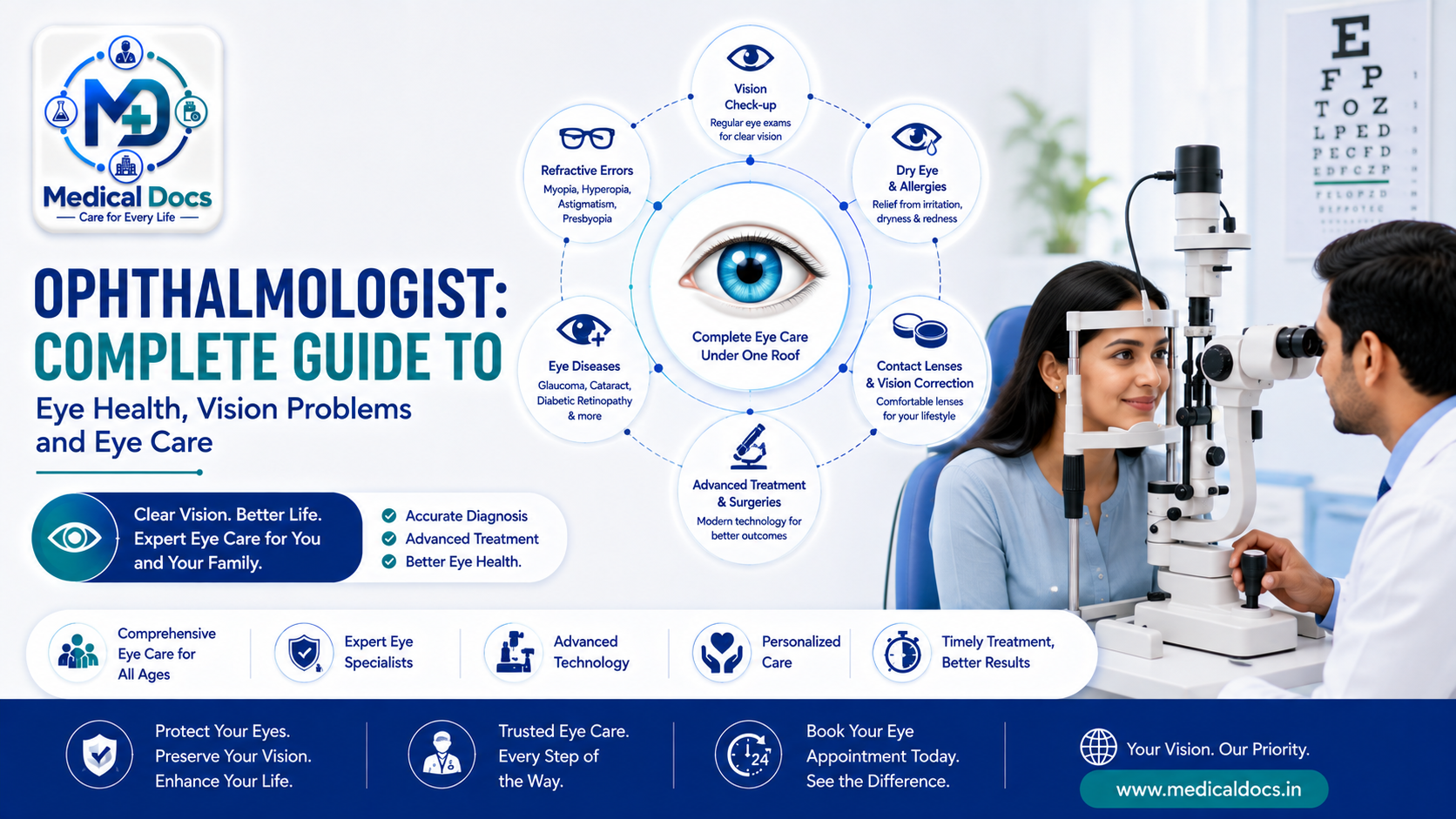
Ophthalmologist: Complete Guide to Eye Health, Vision Problems and Eye Care
Learn what an Ophthalmologist treats, common eye and vision problems, when to seek eye care, important eye tests, treatment options and how to protect your long-term eye health.
Your eyes work from the moment you wake up until you close them at night.
Reading a message, driving to work, recognizing a familiar face, working on a computer or simply enjoying the world around you—all depend on healthy vision.
But changes in eyesight are often ignored until they start affecting everyday life.
Blurred vision, frequent headaches, eye pain, flashes of light, difficulty seeing at night or a gradual loss of vision can have many different causes. Some problems may simply require a change in glasses, while others may indicate an eye disease that needs medical attention.
This is where an Ophthalmologist plays an important role.
An Ophthalmologist is a medical doctor specializing in the diagnosis, treatment and prevention of diseases and disorders of the eyes and visual system. Ophthalmologists can provide medical and surgical eye care and can prescribe glasses or contact lenses when appropriate.
Medical Docs – India’s Most Trusted Healthcare Single Window Platform helps patients discover doctors and healthcare services through a connected digital healthcare ecosystem.
What Is an Ophthalmologist?
An Ophthalmologist is a physician who specializes in eye health and vision.
Unlike professionals who only assess vision or provide corrective lenses, Ophthalmologists are medical doctors trained to diagnose and treat eye diseases and perform eye surgery when required.
They may manage problems involving:
- Eyeball
- Cornea
- Retina
- Lens
- Optic nerve
- Eyelids
- Eye muscles
- Surrounding eye structures
The American Academy of Ophthalmology describes ophthalmologists as medical doctors who specialize in eye and vision care, including medical and surgical treatment.
Depending on their training, Ophthalmologists may further specialize in areas such as retina, glaucoma, cornea, pediatric ophthalmology, neuro-ophthalmology or oculoplastic surgery.
Ophthalmologist, Optometrist and Optician: What's the Difference?
These three terms are often confused.
Ophthalmologist
A medical doctor who can diagnose and treat eye diseases, prescribe medication and perform eye surgery.
Optometrist
An eye-care professional who examines vision, identifies certain eye problems and provides services such as vision correction. Depending on local laws and qualifications, optometrists may also manage certain eye conditions.
Optician
A professional who prepares and fits eyeglasses and other vision-correction products based on a prescription.
In simple terms:
Eye disease or medical eye problem → Ophthalmologist
Vision examination and correction → Optometrist
Glasses fitting and dispensing → Optician
These professionals can work together as part of a patient's eye-care journey.
Common Problems Treated by an Ophthalmologist
Ophthalmology covers a wide range of conditions.
Some are common and relatively easy to manage, while others can threaten vision if left untreated.
Cataract
A cataract occurs when the normally clear lens inside the eye becomes cloudy.
Common symptoms may include:
- Blurred or cloudy vision
- Difficulty seeing at night
- Increased sensitivity to glare
- Faded colours
- Frequent changes in glasses prescription
- Halos around lights
Cataracts commonly develop with ageing, although they can also occur for other reasons.
When a cataract significantly interferes with daily activities, an Ophthalmologist may recommend cataract surgery.
The National Eye Institute notes that cataract surgery is the only way to remove a cataract, and surgery is generally considered when cataract-related vision loss affects daily activities.
Glaucoma
Glaucoma refers to a group of eye diseases that can damage the optic nerve.
One of the challenges with glaucoma is that it may develop without noticeable symptoms in its early stages.
Over time, untreated glaucoma can lead to permanent vision loss.
Depending on the type and severity, treatment may include:
- Prescription eye drops
- Laser treatment
- Surgery
- Regular monitoring
Because vision loss from glaucoma can be permanent, regular eye examinations can be important for people at increased risk.
Diabetic Retinopathy
Diabetes can affect the small blood vessels in the retina.
This condition is called diabetic retinopathy.
Early diabetic retinopathy may produce few or no noticeable symptoms.
As it progresses, it can cause:
- Blurred vision
- Floaters
- Dark spots
- Vision changes
- Vision loss
People living with diabetes should discuss appropriate eye examinations with their healthcare team.
The National Eye Institute emphasizes that people with diabetes can reduce their risk of diabetic eye disease through good management of blood sugar, blood pressure and cholesterol and appropriate eye examinations.
Refractive Errors and Blurred Vision
Not every vision problem is caused by an eye disease.
Refractive errors occur when the shape of the eye prevents light from focusing correctly on the retina.
Common types include:
- Myopia
- Hyperopia
- Astigmatism
- Presbyopia
Symptoms may include:
- Blurred vision
- Difficulty seeing distant objects
- Difficulty reading
- Eye strain
- Headaches
Glasses, contact lenses or refractive procedures may be appropriate depending on the individual situation.
An eye examination can determine the cause of blurred vision.
Age-Related Macular Degeneration
The macula is an important part of the retina responsible for central vision.
Age-related macular degeneration, or AMD, affects the macula and can cause changes in central vision.
A person may notice:
- Difficulty reading
- Distorted straight lines
- Difficulty recognizing faces
- A blurred or dark area in central vision
AMD is more common with increasing age.
Regular eye examinations can help identify certain retinal changes, particularly in people at increased risk.
Dry Eyes
Dry eye occurs when the eyes do not have adequate lubrication or tears evaporate too quickly.
Symptoms may include:
- Burning
- Irritation
- Grittiness
- Redness
- Excess watering
- Light sensitivity
- Blurred vision
Long periods of screen use, environmental conditions, certain medications and other factors may contribute to dry-eye symptoms.
Persistent symptoms should be evaluated because chronic dry eye can sometimes require specific treatment.
Eye Allergies and Red Eyes
Red eyes can result from several causes.
These may include:
- Allergies
- Infection
- Dry eye
- Irritation
- Injury
- Inflammation
Using random eye drops without knowing the cause may not be appropriate.
Some eye conditions require specific treatment, and certain medications can cause problems if used incorrectly.
Persistent redness, pain, light sensitivity or vision changes should be assessed by an eye-care professional.
Retinal Problems
The retina is the light-sensitive layer at the back of the eye.
Several conditions can affect the retina.
These may include:
- Retinal tears
- Retinal detachment
- Diabetic retinal disease
- Macular disorders
- Retinal vascular problems
Sudden flashes of light, a sudden increase in floaters or a shadow or curtain-like area across your vision can be warning signs of a retinal problem.
These symptoms require urgent ophthalmic evaluation.
When Should You See an Ophthalmologist?
You do not have to wait until your vision becomes seriously impaired before seeing an eye specialist.
An Ophthalmologist may be appropriate if you experience:
- Persistent blurred vision
- Sudden changes in eyesight
- Double vision
- Eye pain
- Recurrent redness
- Light sensitivity
- Flashes of light
- Sudden increase in floaters
- Difficulty seeing at night
- Loss of peripheral vision
- Changes in colour vision
- Persistent headaches associated with visual symptoms
People with conditions such as diabetes or those at higher risk for certain eye diseases may also need regular eye examinations.
Sudden Vision Loss Is an Emergency
A gradual change in vision may allow time for a scheduled appointment.
Sudden vision loss is different.
If you suddenly lose vision in one or both eyes, develop a major change in vision, or experience sudden flashes and a curtain-like shadow, seek urgent medical attention.
Similarly, severe eye pain accompanied by vision changes, nausea or other concerning symptoms requires prompt assessment.
Do not wait for the symptoms to disappear.
Do not drive yourself if your vision is significantly impaired.
Seek emergency medical care or contact local emergency services.
In India, 112 is the national emergency number.
Why Diabetes Makes Eye Care Especially Important
Diabetes can affect multiple parts of the body, including the eyes.
High blood sugar over time can damage retinal blood vessels and contribute to diabetic eye disease.
The important point is that serious diabetic eye problems may develop before noticeable vision changes occur.
That is why people with diabetes should follow their healthcare professional's recommendations for regular eye examinations.
Managing diabetes, blood pressure and cholesterol can also support overall eye health.
Children's Eye Health
Children may not always realize that their vision is not normal.
A child may simply assume that everyone sees the world the same way.
Parents and teachers should pay attention to signs such as:
- Sitting unusually close to screens
- Holding books very close
- Frequent eye rubbing
- Squinting
- Difficulty reading the board
- Head tilting
- Closing one eye
- Poor hand-eye coordination
- Frequent headaches
- Difficulty concentrating on visual tasks
Some childhood eye conditions can affect visual development if they are not identified appropriately.
A Pediatric Ophthalmologist specializes in eye conditions affecting infants, children and adolescents.
Screen Time and Eye Strain
Screens are now part of everyday life.
Computers, smartphones and tablets can contribute to digital eye strain, particularly when used for long periods without breaks.
Symptoms may include:
- Dry eyes
- Eye fatigue
- Blurred vision
- Headaches
- Difficulty focusing
Simple habits may help reduce discomfort:
Follow the 20-20-20 approach: After about 20 minutes of near work, look at something around 20 feet away for approximately 20 seconds.
Blink regularly: Concentrating on a screen can reduce blinking.
Adjust screen position: Keep the screen at a comfortable distance and angle.
Take breaks: Avoid continuous screen use for long periods.
If symptoms persist despite these measures, an eye examination can help determine whether another problem is present.
How Often Should You Get an Eye Examination?
There is no single schedule that applies equally to everyone.
The appropriate frequency depends on factors such as:
- Age
- Existing eye conditions
- Diabetes
- Family history
- Previous eye surgery
- Use of certain medications
- Contact lens use
- Other medical conditions
People with known eye disease may require more frequent monitoring.
Your Ophthalmologist can recommend an examination schedule based on your individual risk.
What Happens During an Eye Examination?
An eye examination can involve much more than checking whether you can read letters from a distance.
Depending on your age, symptoms and risk factors, the Ophthalmologist may assess:
- Visual acuity
- Eye movements
- Pupil response
- Eye pressure
- Cornea
- Lens
- Retina
- Optic nerve
- Peripheral vision
The doctor may use specialized instruments to examine the internal structures of the eye.
Additional tests may be recommended when necessary.
Common Tests Used in Ophthalmology
Visual Acuity Test
Measures how clearly you can see at different distances.
Tonometry
Measures the pressure inside the eye and may be used when evaluating glaucoma risk.
Dilated Eye Examination
Eye drops may be used to enlarge the pupils so the doctor can examine the retina and optic nerve more thoroughly.
OCT Scan
Optical coherence tomography provides detailed images of retinal layers and is useful in evaluating several retinal and optic-nerve conditions.
Visual Field Test
Measures the range of vision, including peripheral vision.
Corneal Examination
Specialized examination can assess the cornea and other front structures of the eye.
The tests required depend on the individual patient.
Eye Surgery: When Is It Needed?
Many eye problems can be managed without surgery.
However, some conditions may require an operation or procedure.
Examples can include:
- Cataract surgery
- Certain glaucoma procedures
- Retinal surgery
- Corneal procedures
- Eye muscle surgery
- Certain eyelid procedures
Surgery is recommended only when clinically appropriate.
An Ophthalmologist will generally discuss the diagnosis, available treatment options, expected benefits, potential risks and follow-up requirements.
Can Eye Diseases Be Prevented?
Not every eye disease can be prevented.
However, several habits can support long-term eye health.
Control Diabetes and Blood Pressure
Good management of chronic health conditions can reduce the risk of certain eye complications.
Protect Your Eyes
Use appropriate protective eyewear during activities where eye injury is possible.
Avoid Smoking
Smoking is associated with an increased risk of several eye diseases.
Eat a Balanced Diet
Adequate nutrition supports overall health, including eye health.
Wear Sunglasses When Appropriate
Quality sunglasses that provide UV protection can help protect the eyes from excessive ultraviolet exposure.
Do Not Ignore Vision Changes
New or worsening symptoms deserve attention.
Avoid Using Someone Else's Eye Drops
Eye medications should be used according to professional advice.
Ophthalmologist vs Eye Specialist: Why the Qualification Matters
The term "eye specialist" is sometimes used broadly.
When you are dealing with a medical eye condition, it is important to understand the qualifications of the professional you are consulting.
An Ophthalmologist is a medical doctor trained specifically in eye disease and treatment.
If you have:
- Eye pain
- Sudden vision changes
- Suspected cataract
- Glaucoma
- Retinal problems
- Diabetic eye disease
- Eye injury
- Other medical eye conditions
consulting a qualified Ophthalmologist may be appropriate.
Choosing the Right Ophthalmologist
Finding an eye specialist is not simply about choosing the nearest clinic.
Consider:
Qualifications
Verify the doctor's medical qualification and ophthalmology specialization.
Area of Expertise
Some Ophthalmologists specialize in:
- Cataract
- Cornea
- Retina
- Glaucoma
- Pediatric ophthalmology
- Neuro-ophthalmology
- Oculoplastic surgery
Diagnostic Facilities
If advanced testing is required, access to appropriate diagnostic equipment can be useful.
Surgical Facilities
If surgery becomes necessary, consider the hospital or surgical centre where the procedure is performed.
Communication
Your doctor should explain your condition and treatment options clearly.
Find an Ophthalmologist Through Medical Docs
Finding the right eye specialist can become difficult when doctors, clinics, hospitals and diagnostic facilities are listed across different platforms.
Medical Docs – India’s Most Trusted Healthcare Single Window Platform is designed to connect patients with healthcare providers through one digital healthcare ecosystem.
Patients can explore doctors and healthcare services based on their needs.
Find an Ophthalmologist on Medical Docs
Medical Docs connects:
Patients → Doctors → Clinics → Hospitals → Diagnostic Laboratories → Pharmacies
This single-window approach is designed to make healthcare discovery more connected and organized.
A Connected Journey for Eye Care
Eye care may involve more than a single consultation.
A patient's journey could include:
Ophthalmologist → Eye Examination → Diagnostic Testing → Treatment → Pharmacy → Follow-Up
For some conditions, hospital services or surgery may also become part of the treatment journey.
Having access to different healthcare services through a connected ecosystem can make it easier for patients to navigate their healthcare needs.
Through Medical Docs, patients can explore doctors, clinics, hospitals, diagnostic laboratories and pharmacies.
Why Regular Eye Care Matters
Many people associate eye care only with glasses.
But healthy vision involves much more.
Eye examinations can help identify conditions that may not produce obvious symptoms in their early stages.
This is particularly important for diseases such as glaucoma and diabetic eye disease, where early detection and appropriate management can help protect vision.
Your eyes should not only be checked when you cannot see clearly.
They deserve attention as part of your overall healthcare.
Frequently Asked Questions About Ophthalmologists
What does an Ophthalmologist do?
An Ophthalmologist is a medical doctor who diagnoses and treats diseases and disorders of the eyes and visual system. They can provide medical treatment and perform eye surgery when necessary.
What is the difference between an Ophthalmologist and an Optometrist?
An Ophthalmologist is a medical doctor specializing in eye disease and can perform surgery. An Optometrist provides vision care and may diagnose and manage certain eye conditions depending on their qualifications and local scope of practice.
When should I see an Ophthalmologist?
You should consider an eye specialist if you have persistent blurred vision, eye pain, recurring redness, double vision, sudden vision changes, flashes, increasing floaters or other concerning visual symptoms.
Can an Ophthalmologist treat cataracts?
Yes. Ophthalmologists diagnose cataracts and can perform cataract surgery when it is medically appropriate.
Can an Ophthalmologist treat glaucoma?
Yes. Ophthalmologists diagnose and manage glaucoma using treatments that may include medication, laser procedures or surgery.
Does diabetes affect the eyes?
Yes. Diabetes can damage blood vessels in the retina and cause diabetic eye disease, including diabetic retinopathy.
Is sudden vision loss an emergency?
Yes. Sudden vision loss requires urgent medical evaluation because it can be caused by serious eye or neurological conditions.
Can children visit an Ophthalmologist?
Yes. Children can develop eye and vision problems that require professional assessment. Pediatric Ophthalmologists specialize in eye care for children.
Are eye tests necessary if my vision seems normal?
Depending on your age, health conditions and risk factors, regular eye examinations may still be recommended because some eye diseases can develop without obvious early symptoms.
Can I find an Ophthalmologist online?
Yes. You can explore Ophthalmologists and other healthcare providers through Medical Docs.
Conclusion
Vision affects almost every part of daily life, yet many eye conditions can develop quietly before noticeable symptoms appear.
An Ophthalmologist specializes in diagnosing and treating diseases of the eyes and visual system—from cataracts, glaucoma and diabetic eye disease to retinal conditions, corneal problems and other vision-related concerns.
Not every eye problem requires surgery, and not every vision change means there is a serious disease. But persistent, unusual or sudden symptoms should not be ignored.
Regular eye care is especially important for people with diabetes, a family history of eye disease, previous eye conditions or other risk factors.
And when a serious visual symptom occurs suddenly, such as major vision loss, flashes or a curtain-like shadow across the field of vision, seek urgent medical attention.
Medical Docs – India’s Most Trusted Healthcare Single Window Platform is designed to connect patients with doctors, clinics, hospitals, diagnostic laboratories and pharmacies through one connected healthcare ecosystem.
Find the right Ophthalmologist and explore eye-care services with Medical Docs.
Medical Disclaimer
This article is intended for general educational and informational purposes only. It does not provide a diagnosis or replace consultation with a qualified Ophthalmologist or other healthcare professional. Eye symptoms can have many different causes and require individual assessment. Do not use prescription eye medicines without appropriate medical advice. Sudden vision loss, severe eye pain, significant eye injury or other acute visual symptoms require prompt medical evaluation.
Medical information notice
This article is for education only and does not replace diagnosis, treatment or advice from a qualified healthcare professional. Seek urgent care for emergency symptoms.